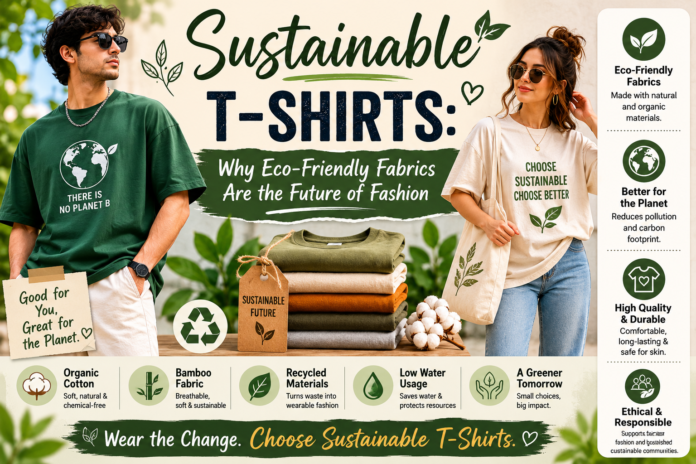
The fashion industry is evolving, and so are consumer expectations. Buyers today aren’t only interested in how the tee shirt looks, or what it costs. The buyers want to know where the t-shirt came from, how it was made, and what effect its production has had on our planet. Sustainability in t-shirts has moved beyond a niche choice for ethical clothing to a mainstream demand. Brands that embrace this trend are creating stronger and more loyal customers, while those that do not are rapidly losing their relevance.
Why Sustainability in T-Shirts Matters More Than Ever
T-shirt production has a high environmental impact. The traditional cotton farming uses huge amounts of water, as well as pesticides. The production of synthetic fabrics is heavily dependent on fossil fuels. Chemical waste from dyeing and finishing is harmful to waterways worldwide.
These impacts are increasingly understood by consumers, and their purchasing decisions reflect this. The research shows consistently that the younger demographic — which is driving growth in fashion — prefers brands with a genuine commitment to environmental protection over those that do not. Sustainability is not a nice-to have in marketing. A growing number of global fashion buyers are using it as a standard purchasing criteria.
The Best Eco-Friendly Fabrics for Sustainable T-Shirts
Not all sustainable fabrics deliver equally — and understanding what each one offers helps brands make informed choices that genuinely serve both environmental and commercial goals.
Organic Cotton Organic cotton grows without synthetic pesticides or fertilizers — significantly reducing chemical impact on soil and waterways compared to conventional cotton. It feels virtually identical to conventional cotton against the skin — soft, breathable, and comfortable for all-day wear. For brands building casual wear collections around sustainable values, organic cotton t-shirts provide the most accessible and commercially familiar entry point into eco-friendly production.
Recycled Polyester (rPET) Recycled polyester is made from post-consumer plastic waste — primarily PET bottles — processed into fiber. It performs comparably to virgin polyester in durability and moisture management while diverting plastic waste from landfill and ocean environments. rPET works particularly well for performance-oriented t-shirts and streetwear collections where fabric performance matters alongside environmental credentials.
Bamboo Fabric Bamboo grows rapidly without irrigation or pesticides — making it one of the most resource-efficient natural fiber sources available. Bamboo fabric is incredibly soft, naturally antibacterial, and moisture-wicking — properties that make it genuinely superior to conventional cotton in comfort and performance terms. Bamboo t-shirts carry strong premium positioning potential because the material story resonates powerfully with eco-conscious consumers willing to pay more for genuinely better products.
TENCEL (Lyocell) TENCEL is produced from sustainably sourced wood pulp through a closed-loop manufacturing process that recycles water and solvents rather than releasing them as waste. The resulting fabric is silky smooth, breathable, and biodegradable — making it one of the most genuinely sustainable fabric options available for fashion production. TENCEL t-shirts and tops suit premium sustainable fashion brands building collections that lead with both environmental credibility and luxury feel.
Hemp Fabric Hemp requires minimal water and no pesticides — growing prolifically with very low environmental footprint. Hemp fabric is durable, naturally antimicrobial, and softens beautifully with washing and wear. It suits brands targeting outdoor, lifestyle, and heritage-inspired markets where durability and natural material stories resonate strongly with core customers.
Building a Sustainable T-Shirt Collection That Actually Sells
Environmental credentials alone don’t sell t-shirts. Quality, design, and brand story all matter equally — and sustainable brands that neglect any of these elements struggle commercially regardless of how strong their environmental commitments are.
Sustainable t-shirts must deliver on every conventional quality metric — fabric hand-feel, construction durability, color fastness, print quality, and consistent sizing — while also carrying credible environmental credentials. Customers who pay a sustainability premium expect superior quality in return. Delivering that quality is what converts first-time buyers into loyal advocates who recommend your brand actively.
A professional t-shirts manufacturer with genuine sustainable fabric expertise guides you through material selection, print technique choices, and construction standards — ensuring your sustainable collection performs commercially as well as it performs environmentally.
Communicating Your Sustainability Story
Sustainable fashion brands that communicate their environmental story clearly and honestly build significantly stronger customer trust than brands that use vague sustainability language without specific evidence behind it.
Be specific about what makes your t-shirts sustainable — the exact fabric, the certification standards it meets, the specific environmental impact it reduces compared to conventional alternatives. Customers who understand exactly what they’re supporting become vocal advocates who market your brand authentically through their own networks and social media platforms.
Brands expanding sustainable credentials across their full collection — into hoodies, sweatshirts, and co-ord sets — benefit from working with a fashionwear manufacturer who sources and works with eco-friendly fabrics consistently across multiple product categories — maintaining credible sustainability standards across your entire brand rather than just your t-shirt range.
Conclusion
Sustainable t-shirts are not a trend that will pass. They represent a permanent shift in how consumers think about the clothes they buy and the brands they support. Eco-friendly fabrics — organic cotton, recycled polyester, bamboo, TENCEL, and hemp — each offer genuine environmental benefits alongside strong commercial appeal to the growing consumer segment that makes purchasing decisions based on values as much as price and aesthetics. Build your t-shirt collection around these materials, communicate your story honestly, and deliver quality that justifies the investment — and your sustainable fashion brand will find customers who stick around for years.
FAQs
Are sustainable t-shirts more expensive to manufacture than conventional ones?
Generally yes — eco-friendly fabrics carry a modest premium over conventional materials. However, brands consistently find that sustainable positioning supports higher retail prices and stronger margins that more than offset the additional production cost.
Do sustainable fabrics perform as well as conventional materials in t-shirt production?
Yes. Organic cotton, bamboo, and TENCEL all perform comparably or superiorly to conventional cotton in comfort, breathability, and durability — while recycled polyester matches virgin polyester in performance applications.
Can sustainable t-shirts be fully customized under a private label?
Absolutely. Sustainable t-shirts support full private label customization including custom fabric weights, colors, print techniques, labels, and packaging — giving your brand complete creative control over every eco-friendly piece you produce.
What certification should I look for when sourcing sustainable t-shirt fabrics?
Look for GOTS certification for organic cotton, GRS certification for recycled materials, and OEKO-TEX Standard 100 for fabric safety — these certifications provide credible third-party verification of your sustainability claims to consumers.