Right now, there are two styles of joggers racing for consumer loyalty. The classic jogger is historically well-designed with a level of comfort and style that appeals to a broad audience. Attention is being drawn to cargo joggers for their utility. They bring a style and sophistication with a streetwear edge that is hard to ignore. For fashion brands allocating budget to product development, creating cargo AND classic joggers makes the difference of a collection that is sure to appeal to the target market and one that will for sure miss the mark.
Here is a straightforward, objective analysis of both joggers and what sets them apart.
What Defines a Classic Jogger?
Classic joggers are the elite of simplicity. From elastic waistbands to ribbed ankle cuffs, they are clean, simple, and fully functional for your everyday needs. Their designs don’t draw attention. However, they are undeniably comfortable and a must-have.
The reason for the popularity of classic joggers is their simplicity. They can be worn by anyone, anywhere, and at any time, making them the perfect, fuss-free addition to your wardrobe. Great joggers lead to happy customers, and therefore, high customer retention.
Classic joggers suit:
- Everyday casualwear and loungewear collections
- Co-ord set pairings with matching hoodies or sweatshirts
- Athletic crossover and activewear-adjacent markets
- Brands targeting broad demographic appeal across multiple age groups
A reliable joggers manufacturer produces classic styles with consistent waistband quality, accurate cuff sizing, and fabric weights that hold shape through repeated washing — the construction details that determine whether customers keep wearing or stop buying.
What Defines a Cargo Jogger?
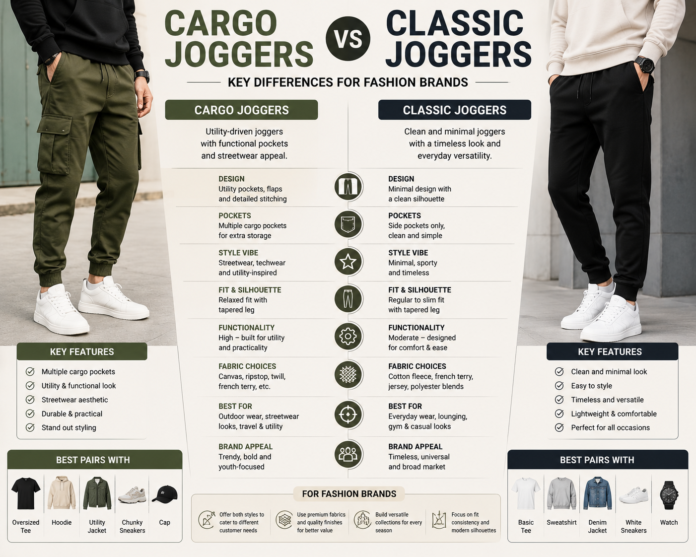
Cargo joggers are an extension of standard joggers and utilize an added layer of design for utility. They have multiple pockets on the sides with a flap closure or zipper pocket, D-ring hardware, and adjustable straps. They may have contrast paneling as well. They are distinct, complex, and have real streetwear credentials.
The cargo design has roots in military wear and workwear styles, meaning that the design has a history and it isn’t a passing trend. For the customers buying cargo joggers, they, in fact, possess the utility, complexity, and streetwear identity that the details communicate.
Cargo joggers perform strongest for:
- Streetwear brands targeting urban and youth markets
- Brands building around utility and workwear-inspired aesthetics
- Collections targeting customers who follow fashion closely
- Brands where social media content and outfit photography drive sales
Brands already producing cargo pants find cargo joggers a natural collection extension — serving the same customer with a more comfortable, casual silhouette that maintains the utility aesthetic they already love.
Key Differences: Construction and Materials
The two styles differ significantly in the complexity of their construction. This causes differences in manufacturing costs, the time spent producing the garments, and retail prices.
Classic joggers have simple construction. They usually have two or three pockets and a few simple seam lines which keep production efficient enough to sell the joggers at a lower price point. Mid-weight cotton fleece and cotton-polyester blends between 280 and 350gsm can be used in the majority of styles of classic joggers without any issues.
The construction of cargo joggers is more complex. Because they have more pockets, additional hardware, and flap and strap detailing, the time and cost to produce the joggers is higher. Mid-weight cotton-polyester blends offer fabrication durability to the cargo construction elements while keeping the overall weight of the garment in check.
Cargo Joggers vs Classic Joggers: Side-by-Side
| Feature | Classic Joggers | Cargo Joggers |
|---|---|---|
| Silhouette | Clean and tapered | Relaxed with added volume |
| Pocket Construction | Simple side or kangaroo pockets | Multiple utility pockets with hardware |
| Construction Complexity | Low to moderate | Moderate to high |
| Target Market | Broad — all demographics | Streetwear and urban fashion focused |
| Customization Potential | Good | Very high |
| Retail Price Point | Mid range | Mid to premium |
| Current Trend Strength | Consistently strong | Growing strongly in streetwear |
| Best Pairing | Hoodies and sweatshirts | Graphic tees and statement jackets |
Which Style Builds Stronger Brand Identity?
Classic joggers build broad customer bases. Cargo joggers build passionate brand communities. That distinction matters enormously for how you position and market your collection.
A brand selling classic joggers attracts a wide range of customers who want comfortable, reliable casualwear. A brand selling well-executed cargo joggers attracts fashion-conscious customers who actively identify with the brand’s aesthetic and return specifically for new drops and seasonal updates.
Streetwear brands building community-driven audiences generally benefit more from cargo jogger investment because those customers share content, recommend brands actively, and build the organic marketing momentum that grows fashion labels faster than any paid advertising campaign.
Casual wear brands targeting broader markets benefit from classic joggers as their foundation reliable, consistent sellers that generate steady revenue across every season without depending on trend cycles for demand.
Building Both Styles Into Your Collection
The strongest fashion brands don’t choose between classic and cargo — they build both into their collections strategically. Classic joggers anchor the range with broad appeal and consistent sales. Cargo joggers add fashion credibility, higher price points, and the kind of visual interest that drives strong content performance on social media.
Working with a professional fashionwear manufacturer who handles both construction types ensures consistent quality standards across your entire jogger range. Brands expanding their collections into tracksuits and co-ord sets benefit from that same manufacturing consistency — building collections that feel cohesive and intentional rather than assembled from multiple disconnected production sources.
Conclusion
Cargo joggers vs classic joggers serve different customers, build different brand relationships, and deliver different commercial results. Classic joggers deliver broad market coverage and consistent revenue. Cargo joggers deliver streetwear credibility, passionate community engagement, and stronger brand identity among fashion-forward customers. Understanding these differences clearly allows your brand to make deliberate, confident collection decisions — building a jogger range that serves your specific market powerfully rather than trying to be everything to everyone.
FAQs
Can cargo and classic joggers be produced in the same fabric colorways?
Yes. Running both styles in consistent colorways creates strong collection cohesion — allowing customers to mix and match pieces across your range while reinforcing your brand’s visual identity.
Are cargo joggers more expensive to manufacture than classic joggers?
Yes — typically 15% to 30% more due to additional pocket construction, hardware application, and production complexity. This cost difference supports higher retail pricing and stronger margins.
What hardware finishes work best for cargo joggers?
Matte black, brushed silver, and antique brass finishes suit most cargo jogger aesthetics — choose hardware that aligns with your brand’s overall color palette and visual identity for maximum cohesion.
Which jogger style photographs better for social media content?
Cargo joggers generally perform better in outfit photography — their visual complexity, pocket details, and hardware create more interesting images that drive stronger engagement on social media platforms.