Introduction: What Is Vegan Leather?
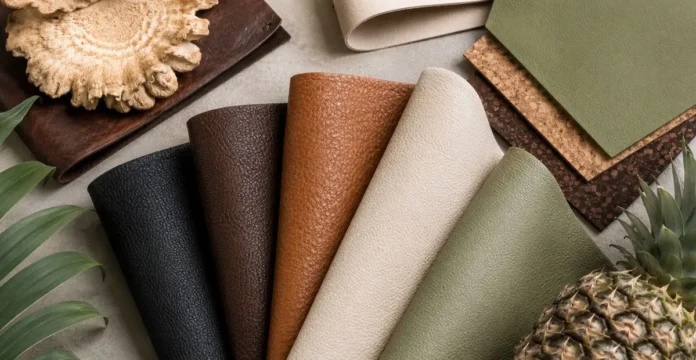
Vegan leather is any leather look-alike that is not made from animal hides. It is most commonly made from synthetic materials like PU (polyurethane) and PVC (polyvinyl chloride) as well as plant-based materials made from pineapple leaves, cactus, mushrooms, apple waste, cork, and grape waste. It is referred to as vegan because it does not contain materials derived from animals. Vegan leather is also preferred by many because it is much cheaper than leather, and does not have ethical and environmental issues like real leather. The biggest variation between different types of vegan leather lies in their sustainability. Some vegan leathers incorporate plastics, while others use bio-based materials that have less environmental impact.
What Is Vegan Leather?
Vegan leather is a material that imitates real leather but is made without using any animal skin. These materials include synthetic leather, artificial leather, faux leather, and plant-based leather alternatives.
Vegan leather is free from animal products and is often marketed as a sustainable fashion alternative, although some versions are synthetic.
The sustainability of vegan leathers can be questionable if they incorporate some of the more environmentally harmful products like synthetic leathers. These, however, can be improved by using agricultural waste or renewable leathers.
Is Vegan Leather the Same as Faux Leather?
Vegan leather is a subset of faux leather. Faux leather is a broader term, and while most faux leathers do not contain animal products, some may use animal-based glues or coatings.
Does Vegan Leather Contain Plastic?
Many vegan leathers contain plastic. This can be PU and PVC leathers. However, there are vegan leathers that have incorporated bio-based materials that have reduced the amount of plastic.
Alternative Names for Vegan Leather
Other names include:
- Faux leather
- Cruelty-free leather
- Plant-based leather
- Bio-based leather
- Leather alternative
- Artificial leather
- Synthetic leather
History of Vegan Leather
Synthetic leather was invented in the early 20th century. Early products used rubber-coated fabrics because of the high cost of real leather. This was followed by PVC leather in the 1960s as it was inexpensive and very water resistant. This was soon used for shoes, bags, and upholstered furniture.
In the late 20th century, PU leather replaced a lot of PVC leather products as PU leather was not only softer, but it was also less toxic. At the same time, the demand for animal friendly products increased. Along with recent trends focusing on sustainability, this has led to a lot of innovation with alternative leather products, which are plant based, like mushroom, cactus, apple, and pineapple leathers. Today, vegan leather is at the cutting edge of fashion, biotechnology, material science, and ethics.
What Is Vegan Leather Made Of?
A. Synthetic Vegan Leather
PU Leather
A fabric base coated in polyurethane plastic is called PU leather. Manufacturers use surface embossing to simulate the grain of natural leather. Additionally, PU leather is softer than PVC leather and more flexible.
PVC Leather
PVC leather is a combination of polyvinyl chloride and fabric. Manufacturers add plasticizers to improve flexibility and durability of the product. Furthermore, PVC leather is highly water resistant but has low breathability.
Microfiber Leather
Microfiber leather is a combination of ultra-fine synthetic fibers with PU coatings. It is realistic and durable. Additionally, premium microfiber leather usually has a better lifespan than standard PU leather.
B. Plant-Based Vegan Leather
Pineapple Leather (Piñatex)
Piñatex is a combination of fibers from pineapple leaves that are discarded after harvesting. It is processed into a nonwoven textile material. Additionally, it helps reduce agricultural waste and promotes circular production.
Cactus Leather
Cactus leather is made of cactus leaves that are harvested, and the plant is not killed. The biomass is dried and processed into flexible sheets. Furthermore, cactus leather is produced with very low amounts of water.
Mushroom Leather
Mushroom leather is made from the root structure of fungi called mycelium. Manufacturers grow mycelium into dense mat-like materials. Additionally, mushroom leather has the potential to biodegrade very quickly.
Apple Leather
Manufacturers incorporate unwanted apple bits from juice production in apple leather. They also include apple peels. They combine the peels with synthetic binders and backing materials. Apple leather aids the food industry in reducing their waste.
Cork Leather
Cork leather is from the harvested cork oak trees. The bark is harvested without killing the tree. Cork leather is light, water resistant, and has a natural texture.
Coconut Leather
Plant fiber and waste from coconut water are used in coconut leather. The waste is fermented to produce coconut leather sheets. Coconut leather is used in the coconut industry to aid in the effective reduction of post-harvest waste.
Corn Leather
Bio-polymers derived from cornstarch are used to make corn leather. The material is used with other support layers to make durable fabric. Also, the use of corn leather aids in the reduction of plastic use.
Mango Leather
By making leather substitutes from mango fibers, mango leather uses waste from processed foods. The use of mango leather in the food industry leads to the reduction of waste from the food industry.
Grape Leather
By using the seed and the skins in the wine industry, grape leather aids in the recycling of used materials in the wine industry.
How Is Vegan Leather Made?
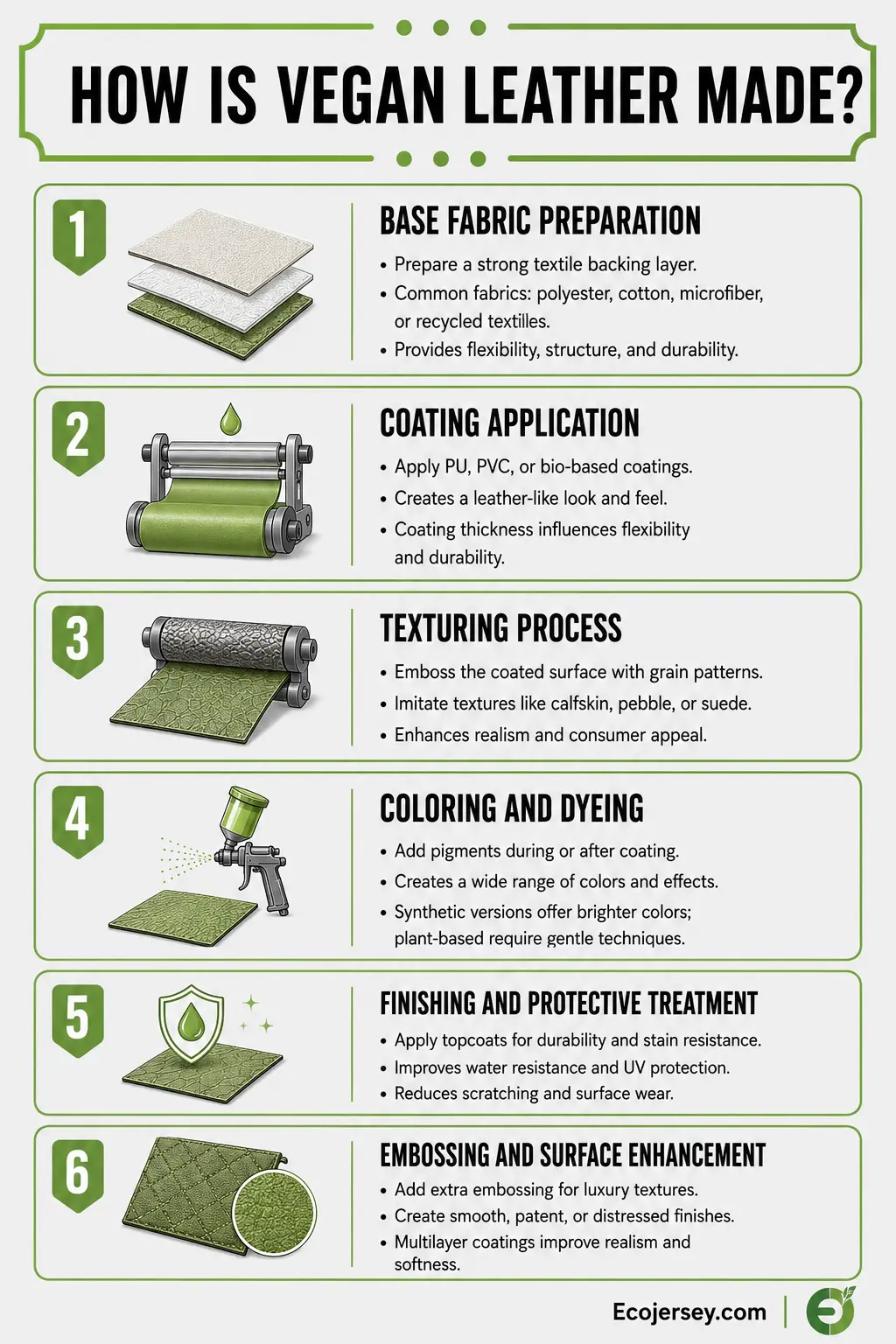
Base Fabric Preparation
Textile backing layer is the first part of the vegan leather making process. This backing layer is made from materials such as cotton or polyester or other synthetic materials or recycled materials. This backing layer aids in flexibility as well as the structure of the leather. In some plant-based vegan leathers, natural fibers are used instead of synthetic materials.
Coating Application
PU, PVC, or bio-based coatings are applied to the fabric surface of the substrate. These coatings are designed to imitate the texture and appearance of leather. Thinner coatings are more flexible, while thicker coatings are more durable. The plant-based versions commonly mesh natural fibers and protective resins.
Texturing Process
The coated substrate is then embossed with grain patterns by machines. Imitations of calfskin, pebble leather, and suede are popular. Many of the embossed materials are also designed with moire finishes and semi-gloss or matte finishes.
Coloring and Dyeing
Pigments are added by manufacturers during or after the coating. This process creates a surface with colors and other effects. Compared to genuine leather, synthetic vegan leather can appear more colorful. Because of this, some plant-based materials are dyed using lower-impact methods.
Finishing and Protective Treatment
Topcoats are added by manufacturers to protect against wear and staining. These coatings are also designed to be water and UV resistant. Finishing treatments also protect against surface wear and scratching. Unfortunately, heavy coatings may slow the biodegradability of the product.
Embossing and Surface Enhancement
The incorporation of additional embossing is common in the luxury industry for the desired texture. In the premium category, the use of multilayer coatings is common for the realism aspect. In the premium category, multilayer coatings are common for realism. Surface enhancement also improves tactile feel and softness.
Types of Vegan Leather
| Type | Material Source | Durability | Eco-Friendliness | Texture | Common Uses |
|---|---|---|---|---|---|
| PU Leather | Polyurethane coating | Moderate | Medium | Soft and smooth | Bags, jackets, shoes |
| PVC Leather | Polyvinyl chloride | High | Low | Glossy and stiff | Furniture, upholstery |
| Microfiber Leather | Synthetic microfibers | High | Medium | Realistic | Luxury goods, automotive |
| Cork Leather | Cork oak bark | Moderate | High | Natural grain | Wallets, bags |
| Mushroom Leather | Mycelium fungi | Moderate | High | Soft and flexible | Fashion accessories |
| Cactus Leather | Cactus leaves | Moderate | High | Smooth matte finish | Handbags, shoes |
| Apple Leather | Apple waste fibers | Moderate | Medium-High | Flexible | Fashion accessories |
| Pineapple Leather | Pineapple leaf fibers | Moderate | High | Textured fabric feel | Footwear, bags |
Vegan Leather vs Real Leather
Appearance
Both can look similar, however vegan leather can replicate many colors and leather textures more consistently. Over a long time of natural aging, genuine leather begins to develop a unique patina.
Feel
Vegan leather on the premium side of the spectrum looks and feels nice as it is soft and flexible. Leather’s unique ability to breathe can provide thermal comfort.
Durability
High-quality looked-after leather can last decades. Inexpensive vegan leather can crack or peel in only a few years.
Breathability
Natural leather contains natural pores that promote airflow. Vegan leather can trap heat and moisture.
Aging
Natural leather develops character and gets softer. Vegan leather sustains the same appearance.
Maintenance
Vegan leather requires minimal moisture treatment. Natural leather requires consistent moisture treatment.
Sustainability
Most vegan leathers avoid the direct use of animal hides and livestock byproducts. Vegan leathers are made from plastic, which is a concern.
Cost
Vegan leather is generally cheaper than natural leather. There are expensive Vegan leathers that are comparable to expensive leather.
Water Resistance
Vegan leather is more water resistant than natural leather. Natural leather can absorb water.
Ethical Concerns
Vegan leather doesn’t use animal products. Natural leather uses animal products.
| Feature | Vegan Leather | Real Leather |
|---|---|---|
| Animal-Free | Yes | No |
| Cost | Lower | Higher |
| Breathability | Lower | Higher |
| Water Resistance | Better | Moderate |
| Aging | Minimal patina | Natural patina |
| Maintenance | Easier | Requires conditioning |
| Durability | Variable | Usually longer |
| Sustainability | Mixed | Mixed |
| Texture Consistency | High | Natural variation |
| Luxury Perception | Growing | Traditional luxury |
Vegan Leather vs Faux Leather vs PU Leather
Vegan Leather
All leather substitutes that do not use animal products classify as vegan leather. The materials can be either synthetic or plant-based. Additionally, vegan leathers either contain plastic or renewable biomass.
Faux Leather
Any materials that imitate the appearance of leather classify as faux leather. The majority of materials that are faux leather are also vegan. The primary focus of the term is not sourcing, but rather the appearance of the material.
PU Leather
PU leather, a form of vegan leather, is leather that uses a synthetic fabric with a coating of polyurethane. Of synthetic leather products across the globe, this material is one of the most widely used.
Is Vegan Leather Sustainable?
Vegan leather has the potential to be sustainable. However, the level of sustainability is determined by the material and the way in which it is manufactured.
Environmental Positives
- Vegan leather is free from animal hides and livestock.
- It contributes to a reduction of methane emissions from cattle.
- Plant-based materials utilize agricultural waste.
- Bio-based innovations encourage the production of renewable materials.
Environmental Negatives
- PU and PVC leather are made from fossil-fuel-based plastics.
- Synthetic versions may leak microplastics eventually.
- Many synthetic products are non-biodegradable for a long time.
- Pollution is caused by chemical coatings used in the manufacturing process.
Balanced Reality
Plant-based vegan leather is more environmentally friendly; however, many products still feature synthetic coatings and binders. Therefore, the sustainability of materials and the brands offering them varies substantially.
Is Vegan Leather Biodegradable?
Some vegan leathers are biodegradable, but many are non-biodegradable.
PU leather is a polymer and, therefore, a type of plastic and non-biodegradable. PVC leather is less biodegradable than PU leather and is more likely to cause environmental harm when it breaks down.
Plant-based vegan leather utilises more biodegradable materials than PU and PVC leather; however, many still use polyester backings and synthetic coatings. Therefore, compostable vegan leather is still relatively uncommon.
Is Vegan Leather Waterproof?
Most vegan leather is waterproof; however, PU and PVC leather are more waterproof than real leather and contain better coatings than real leather.
In some cases, prolonged exposure to moisture may cause a coating to weaken. It may also cause a product to peel or crack if the product is low-quality.
How Durable Is Vegan Leather?
Vegan leather’s durability is based on manufacturing quality and the materials used. Cheap PU leather may last only two to five years. Premium microfiber leather can last much longer.
Various conditions affect durability:
- thickness of coating
- UV light exposure
- daily abrasion
- exposure to heat
- exposure to moisture
As compared to inexpensive synthetic leather, high-quality microfiber vegan leather continues to perform well and, as with any product, good care contributes to a longer life.
Pros and Cons of Vegan Leather
Pros of Vegan Leather
- Using vegan leather helps reduce reliance on animal-derived materials.
- Vegan leather is generally less expensive compared to real leather.
- Many options in colors and textures are available to manufacturers.
- Vegan leather is more commonly water-resistant than other materials.
- This material is lightweight, flexible and easy to handle.
- Little effort is required to keep vegan leather clean.
- Support of a plant-based option encourages the recycling of agricultural waste.
Cons of Vegan Leather
- Some vegan leather contains large amounts of plastic.
- Low-quality products may peel or crack quickly.
- Synthetic versions offer lower breathability.
- Sustainability differs greatly between materials.
- Many products have shorter lifespans than real leather.
- PVC leather may release harmful chemicals during production.
Common Uses of Vegan Leather
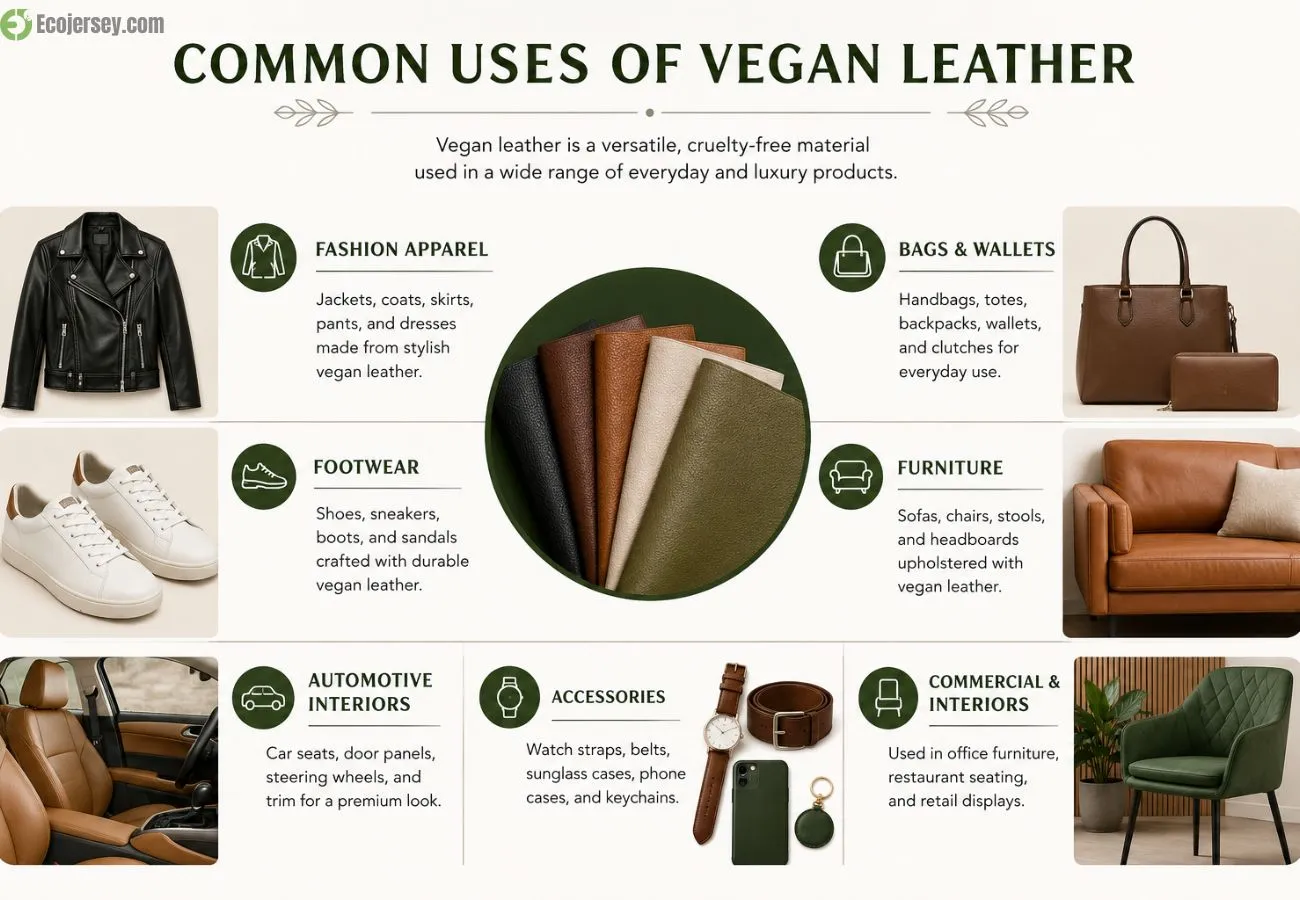
Fashion Uses
- Many fashion collections now include cruel animal leather alternatives such as vegan leather jackets.
- PU and cactus leather are commonly used for cruelty-free handbags.
- Vegan leather provides a more affordable option for leather shoes.
- PU leather is often used for wallets and belts.
Furniture Uses
- Sofas are commonly upholstered in PVC or PU leather.
- Synthetic leather is often used for dining chairs as a cleanable surface.
- Vegan leather is used on office furniture because of its water resistance.
Automotive Uses
- Interiors of cars now commonly use premium microfiber vegan leather.
- Many luxury brands now offer fully vegan seating options.
- Synthetic leather has become more stain-resistant for car interiors.
Accessories Uses
- Apple leather or PU leather are the materials of choice for watch straps.
- Textured synthetic leather coatings are the most commonly used for phone cases.
- Vegan leather materials can also be applied to lightweight travel accessories.
How to Identify High-Quality Vegan Leather
Texture Criteria
High quality vegan leather has built-in flexibility and softness. Materials that don’t shine, but have realistic grain patterns, are a sign of a quality product.
Odor
High quality vegan leather has a neutral or mild scent.. Low quality vegan leather will have a strong metallic smell and is a sign of PVC leather.
Flexibility
High-quality vegan leather will resist cracking, while poor-quality materials may degrade quickly.
Stitch Quality
High quality vegan leather will have strong stitching, while poor quality materials will have uneven stitching.
Backing Fabric
Cotton and microfiber backings are a sign of quality vegan leather, while materials that have thin polyester backings will have a lower quality product.
Labels Used
High quality vegan leathers will have their materials specify PU, microfiber, cactus, or plant-based materials.
High quality vegan leathers will have clear labels, while poor-quality products may use vague or unclear labeling.
Caring for Vegan Leather
- Cleaning Methods
- Most vegan leather can be wiped down with a damp microfiber cloth.
- Using soap that is mild and easy will remove stains, but be careful not to damage the surface coating.
- Proper Storage
- Store the leather in a shaded area out of the sun.
- For long term storage, use dust bags.
- Preventing Cracks
- Regular care will keep the leather flexible and prevent it from cracking.
- Avoid compressing the leather or creating folds.
- Conditioning Myths
- Some vegan leathers may be harmed by conventional leather conditioners.
- Use only treatments made for synthetic materials.
- Heat Exposure
- Leather with PU coatings can deteriorate rapidly with heat.
- Never keep vegan leather in a hot car.
- Waterproofing
- Vegan leather is naturally water resistant.
- Any additional waterproofing sprays should be compatible with the material.
Does Vegan Leather Peel or Crack?
Some vegan leathers, like low-quality PU leather, can crack and peel.
Polyurethane coatings can peel and crack. Heat, sunlight, moisture, and friction accelerate the peeling. Leaving vegan leather in a humid environment can also help speed the process. Compared to the cheaper alternatives, premium vegan leather can be a more sustainable and efficient choice.
Is Vegan Leather Better Than Real Leather?
This depends on the person using the leather.
From an ethical standpoint, vegan leather is better because it is a leather alternative that does not use animal skins. Vegan leather also tends to be more affordable and requires less maintenance. Some plant-based vegan leathers may have environmental advantages, but sustainability varies depending on the materials used.
Real leather does have the advantage when it comes to longevity. Real leather also has the ability to develop a character over time and gives the user a better experience.
Focusing on sustainability, a preference for long-lasting leather, and maintenance should help people decide whether vegan leather or real leather is better.
Conclusion-
Vegan leather is an animal-friendly alternative to real leather and is made from synthetic materials and/or plant-based materials. PU leather, microfiber leather, and leather alternatives made from cactus, mushrooms, and pineapples have become increasingly popular in the market.
Vegan leather can be a good option depending on the user’s needs and the specific material used. Microfiber leather is among the most durable vegan leather options, while products that use a higher percentage of plant-based materials are generally considered more environmentally friendly.
Cost is also an important factor. Some vegan leather products are affordable, while premium plant-based and microfiber alternatives can be expensive. Additionally, plastic-based vegan leather is generally less environmentally friendly than bio-based alternatives. Consumers should evaluate the material, durability, cost, and sustainability of the product before making a purchase decision.
Read More>> All Types of Leather.
FAQs
Is vegan leather real leather?
No. Vegan leather does not use animal skins or animal hides.
Does vegan leather last long?
With a bit of maintenance, vegan leather that is of good quality can last for many years.
Is vegan leather plastic?
PU, PVC, or other plastic materials can frequently be found in vegan leather.
Is vegan leather toxic?
Although some modern-day PU leather is a bit better compared to the older PVC, potential health and environmental concerns depend on the manufacturing materials and processes used.
Is vegan leather eco-friendly?
There are some plastic vegan leathers that are eco-friendly, but some of the leathers that are made of plastic cannot be classified as such.
Does vegan leather smell?
PVC leather of poor quality can have a strong smell of chemicals.
Is vegan leather expensive?
PU leather is quite affordable, while vegan leather of better quality is more expensive.
Is vegan leather good quality?
When using highly engineered microfiber and plant-based materials, extremely good quality can be achieved.
Which vegan leather is best?
Plant-based leathers such as cactus and mushroom leather, along with high-quality microfiber leather, are considered among the best options.
Can vegan leather replace genuine leather completely?
In many regards, vegan leather can fully replace genuine leather, but in terms of aging and durability, they are still different products.