Introduction:
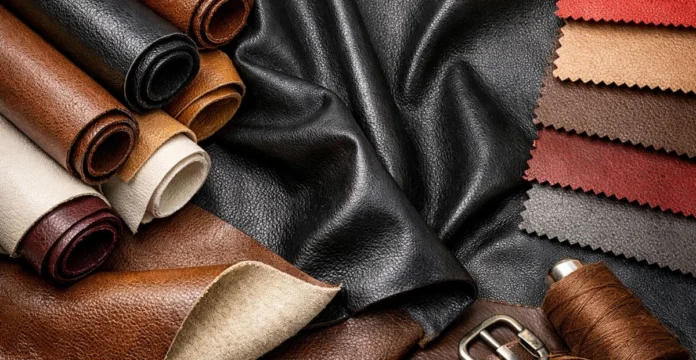
Faux leather is a substitute for animal leather. It is a synthetic material that has a similar look to leather. Faux leather is manufactured using fabric, which is then coated with either polyurethane (PU) or polyvinyl chloride (PVC). It is also called synthetic leather, vegan leather, imitation leather, and pleather.
From a manufacturing perspective, faux leather is cheaper, more water resistant, and does not require animal hides. Faux leather is widely and successfully used in numerous fashion items, furniture, automotive interiors, shoes, and even electronics. Modern production methods easily allow the imitation of texture and finishes that look and feel like real leather.
What is Faux Leather?
Faux leather is artificial leather that can be used in place of real leather in any situation or product that requires the use of leather. Being a synthetic textile, faux leather does not use animal hides. Faux leather is manufactured by coating a fabric backing with a plastic-based material.
Faux leather is mainly manufactured using PU or PVC, which helps create products that are flexible, durable, and water resistant. Modern production methods also use embossing machines that can easily create textures and finishes that look and feel like the real thing.
Faux leather is often confused with vegan leather. While faux leather and vegan leather can be used as substitutes for one another, there are subtle differences. Faux leather exclusively refers to leather substitutes that are purely synthetic, while vegan leather can be plant-based and synthetic.
Common Names for Faux Leather
- Synthetic leather
- Artificial leather
- Vegan leather
- Pleather
- Leatherette
- Leather substitute
Why Manufacturers Use Faux Leather
Manufacturers prefer faux leather for all of the following reasons:
- Lower cost of production
- Uniform quality
- Convenience
- Resistant to stains
- No animal involvement
- Efficient for large-scale production
History of Faux Leather
Early Leather Substitutes
The first attempts at leather substitutes can be traced back to the mid-19th century with fabrics bonded with rubber and textiles coated with wax.
Rise of PVC Leather in the 20th Century
During the 1940s and 1950s, PVC leather became widely adopted due to its waterproof and durable nature. For this reason, its adoption in the furniture and automotive industries was rapid.
Development of PU Leather
PU leather was the next major development, offering not only a softer, more flexible alternative to PVC, but also an improved imitation of real leather. It was for this reason that PU leather became a popular choice for fashion brands to produce jackets, shoes, and handbags.
Modern Vegan Leather Movement
The demand for faux leather increased significantly due to the vegan fashion movement of the 2010’s, when a growing segment of consumers began to seek out cruelty-free alternatives to animal derived leather.
Shift Toward Sustainable Alternatives
There has been a growing variety of innovative leather alternatives using mycelium, cactus fiber, and pineapple fiber, although many still contain some synthetic binders or coatings.
Faux Leather Timeline
| Period | Development |
|---|---|
| 1800s | Rubber-coated fabric leather substitutes |
| 1920s | Non-woven leather synthetics experimentation |
| 1940s | PVC leather synthesized on an industrial scale |
| 1960s | Leather used in cars and other vehicles |
| 1990s | Increased demand for PU leather |
| 2010s | Increased interest in vegan leathers |
| 2020s | Innovation in plant-based leathers |
How Is Faux Leather Made?
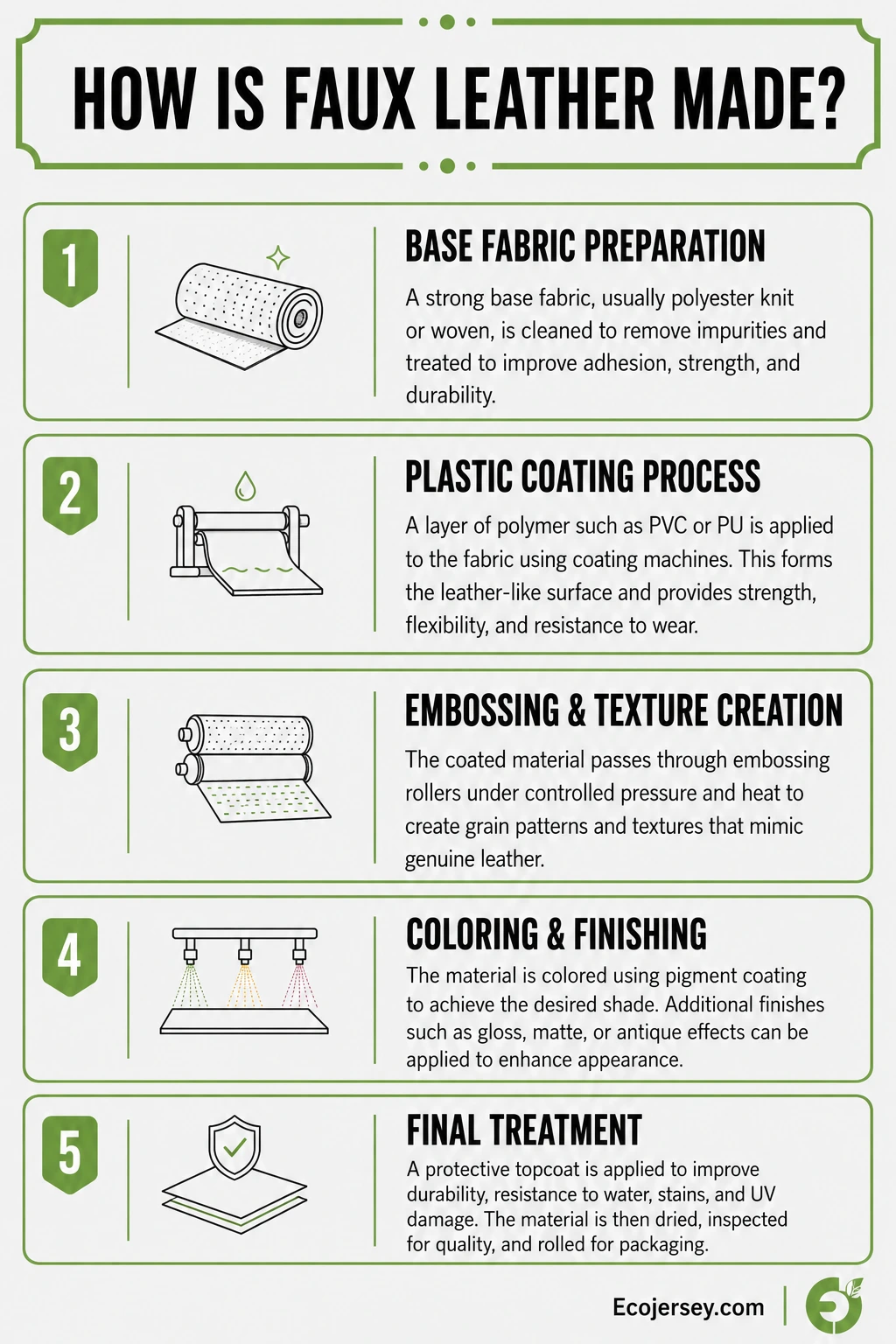
A. Base Fabric Preparation
Faux leather is made of a fabric backing, usually polyester, cotton, or nylon. Choosing the fabric backing directly impacts the faux leather’s softness, durability, and flexibility, as well as the fabric’s resistance to tearing.
B. Plastic Coating Process
The fabric then has a coating of PU or PVC laid over it. Once a liquid polymer is spread over the surface, it is heat cured to create a leather-like surface coating.
C. Embossing and Texture Creation
To create the surface texture, an embossed grain and surface patterns are pressed into the coating. Faux leather is designed to imitate natural leather by providing textures to the surface that resemble leather pores and wrinkles. Faux leather can be finished with either a matte or a glossy coating to provide surface luster.
D. Coloring and Finishing
Pigments and finishing coatings can be added to provide surface finishes that improve the faux leather’s scratch and stain resistance. Maintaining the surface finish is now easier.
E. Final Treatment
Manufacturers inspect the finished material for quality and consistency. Manufacturers roll the faux leather and cut it into sheets. Some products get antimicrobial and UV protection. Manufacturers send the materials for the production of goods.
Faux Leather vs Real Leather
| Factor | Faux Leather | Real Leather |
|---|---|---|
| Material Source | Synthetic polymers | Animal hides |
| Cost | Lower | Higher |
| Durability | Moderate | High |
| Breathability | Lower | Better |
| Water Resistance | Better | Moderate |
| Maintenance | Easier | Requires conditioning |
| Appearance | Uniform | Natural variations |
| Sustainability | Mixed impact | Animal agriculture impact |
| Lifespan | 3–10 years | 10–30 years |
| Texture | Artificial feel possible | Natural feel |
Which Is Better?
Neither option is universally better for every consumer. Faux leather works better for vegan consumers. Genuine leather may be a better choice for consumers seeking long-term durability and natural aging characteristics.
Which Lasts Longer?
Real leather lasts far longer than faux leather, which must be replaced after several years. When well maintained, leather lasts decades with a natural patina.
Which Is More Eco-Friendly?
This depends on the production methods and environmental impacts of each material. Faux leather avoids animal agriculture but usually uses petroleum plastics. Real leather uses livestock emissions and a chemical tan.
Which Cracks Faster?
PVC leather cracks faster than genuine leather. This happens because plastic deteriorates over time, especially when exposed to heat. PU leather lasts longer than PVC leather.
Faux Leather vs Vegan Leather
Though they are often used interchangeably, faux leather and vegan leather are not the same. Faux leather is a synthetic leather alternative. Vegan leather speaks to alternative materials that do not contain animal products.
Faux leather contains PU and PVC. Because of this, not all vegan leather is eco-friendly.
Alternative Plant Based Vegan Leather
Cactus Leather
Cactus leather uses cactus fibers combined with bio-based resins and generally requires less water than traditional leather production.
Mushroom Leather
Mycelium leather uses fungal root-like structures and improves biodegradability and impacts on the environment.
Apple Leather
Apple leather uses discarded apples from juice production for bags and footwear.
Cork Leather
Cork leather uses the outer layer of the cork oak and is lightweight and flexible.
Pineapple Leather (Piñatex)
Piñatex uses fibers from the leaves of the pineapple plant and supports a circular manufacturing system.
Types of Faux Leather
PU Leather
PU leather is very soft and flexible. It also looks very similar to authentic leather. Fashion brands use PU leather for their high end products and marketing because of how breathable and comfortable it is.
PVC Leather
PVC leather is a cheaper option and is very water resistant. It can withstand heavy use, but is much stiffer and less breathable than PU leather. Because of this, it is commonly used in furniture and commercial seating.
Bio-Based Faux Leather
Bio-based faux leather comes from renewable plant materials, not petroleum plastics. Manufacturers use natural fibers combined with bio-resins. This reduces fossil fuel dependence. Additionally, these materials support more sustainable product development.
Silicone Leather
Silicone leather is particularly durable and heat resistant. Additionally, it has low VOC emissions compared to PVC leather. Because of this, many premium automotive companies are developing silicone based interiors. Lastly, it has excellent stain resistance.
Recycled Faux Leather
Recycled faux leather comes from either recycled plastics or waste material created from manufacturing the product. Through this process, manufacturers are creating circular manufacturing systems and decreasing landfill waste. However, there is a lack of adequate recycling infrastructure worldwide.
What Is Faux Leather Made Of?
Polyurethane (PU)
PU produces soft and flexible surfaces to create synthetic leather. This is predominantly used for fashion and upholstery applications. It can closely replicate the texture and appearance of genuine leather.
Polyvinyl Chloride (PVC)
PVC is popular for being strong and highly water resistant. This material must be plasticized to ensure softness. The process of creating PVC leather does have serious environmental concerns.
Plasticizers
Plasticizers create soft and flexible faux leather products. Without this, synthetic leather turns brittle and rigid. Additionally, it negatively affects the product’s durability and cracking resistance.
Fabric Backing
Fabric Backing is used to support the plastic coating structure. The most common fabrics used are polyester, cotton, and nylon. Fabric backing materials improve strength, longevity, and tear resistance.
Additives & Pigments
The finishing or coating of synthetic leather includes improved UV resistance. This is achieved through additives to protect against scratches and improve color retention. Coatings also include pigments and stabilizers.
Is Faux Leather Real Leather?
Faux leather is synthetic since it does not originate from animal skin. It is manufactured with plastic coatings and fabric backing instead of skin fibers.
Is Faux Leather Vegan?
Faux leather is generally classified as a vegan product as it does not utilize animal-derived products. It should be noted that vegan products are not necessarily sustainable.
Faux leather is primarily manufactured with petroleum-based plastic. Consumers should also consider the environmental impact of these materials.
Is Faux Leather Sustainable?
When assessing the sustainability impacts of faux leather products, it becomes clearer that there are some positive and negative aspects.
From a positive perspective, faux leather products reduce the environmental impacts from animal farming and accessory leather tanning. From a negative point of view, faux leather products are predominantly manufactured of petroleum-based plastics.
Sustainability Challenges
- Dependence on petroleum
- Generation of plastics waste
- Low biodegradability
- Pollution from microplastics
- Recycling difficulties
Sustainability Advantages
- Elimination of animal hides
- Lower water usage compared to many traditional leather tanning processes
- Reduced methane release from cattle
- Increased use of recycled materials
Innovations in Sustainability
- bio-based PU.
- recycled polyester backings.
- solvent-free coatings.
- plant-based leather substitutes.
- circular recycling systems.
Common Uses of Faux Leather
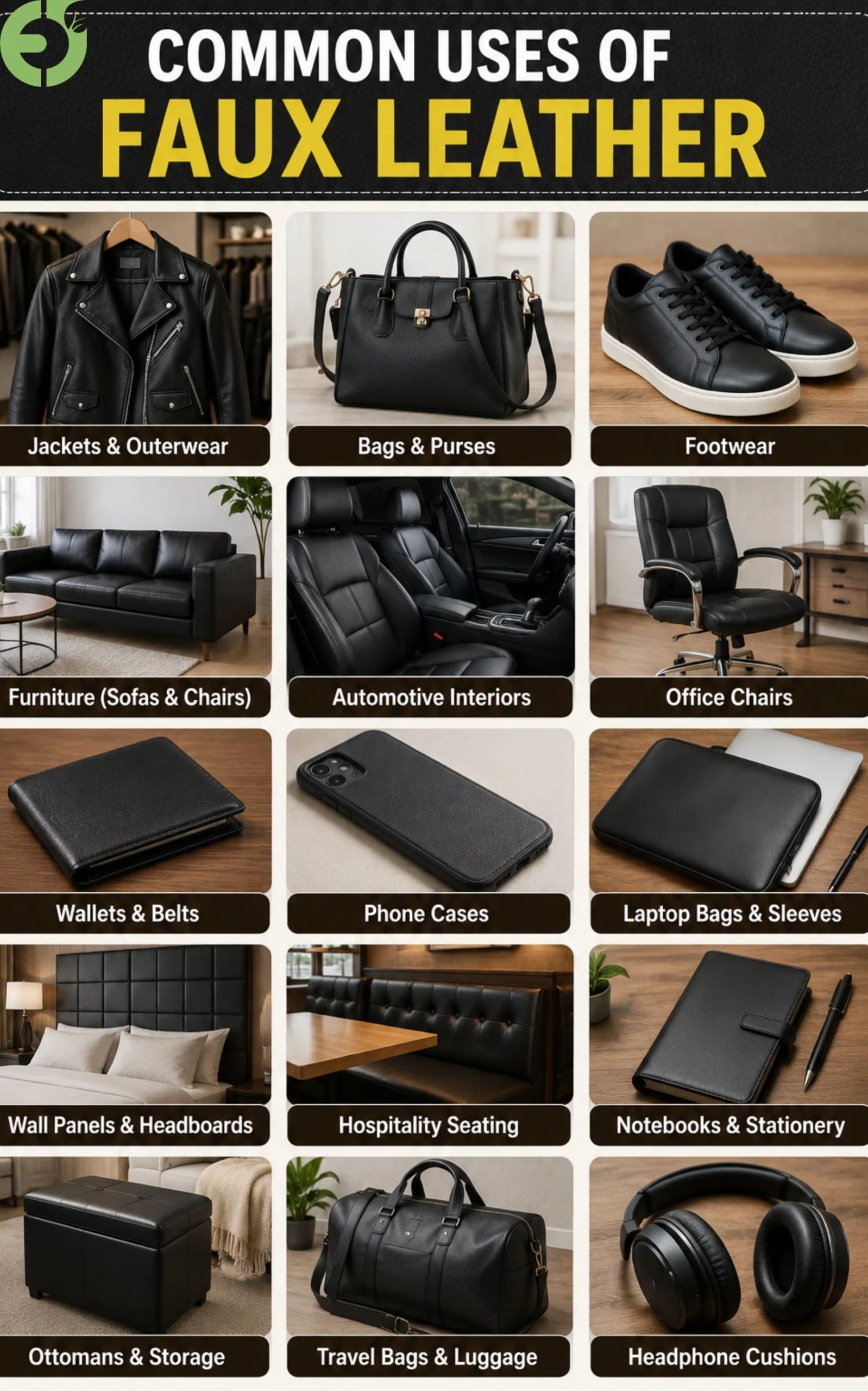
Fashion
- Faux leather jackets are stylish and affordable outerwear options.
- Various brands utilize PU leather for bags and belts.
- Boot and sneaker companies use fake leather for both boots and sneakers.
- Faux leather has become widely accepted in fashion and commercial product design.
Furniture
- Faux leather sofas are generally more stain resistant than many fabric upholstery materials.
- Durability and affordability make PVC leather a common choice for office chair upholstery.
- Upholstery manufacturers use PVC leather as it is low maintenance.
Automotive
- Vegan leather is commonly used for the interiors of modern vehicles.
- Covers for steering wheels often use PVC leather.
- Faux leather seats generally resist moisture absorption and everyday wear under normal use.
Electronics
- Faux leather meets the requirements of the high-end look of phone cases.
- The use of PVC leather in laptop sleeves offers protection against scratches.
- Tablet accessories also use a great deal of PVC leather.
Hospitality & Commercial Interiors
- Faux leather is an ideal upholstery choice for restaurants.
- Hotels use it for decorating wall panels and for furniture upholstery.
- It is a great choice for commercial interiors due to its uniform look, as well as its low cost.
Advantages of Faux Leather
Affordable
- It is less expensive compared to real leather.
- Large-scale production helps reduce manufacturing costs.
Water Resistant
- Synthetic coatings provide a high degree of moisture resistance.
- This quality also speeds the cleaning process.
Easy Maintenance
- Faux leather is low maintenance.
- Conditioning is often unnecessary.
Animal-Free
- The use of animal hides is completely avoided with faux leather.
- Hence it is a preferred choice for many who are concerned about vegan options.
Uniform Appearance
- Manufacturers can easily achieve uniform color and texture.
- This quality makes it ideal for large-scale commercial production.
Lightweight
- Faux leather products are often lighter than genuine leather products.
- Hence, bags and jackets are easier to carry.
Cons of Faux Leather
Cracking & Peeling
- Faux leather peels with time and use.
- Damage by heat and sunlight is significant and increases with time.
Reduced Lifespan
- Faux leather of all types (whether PU or PVC) has lower longevity compared to genuine leather.
- Cheaper PVC leathers degrade very fast.
Sensitivity to Heat
- Faux leather can warp or harden when exposed to elevated temperatures.
- Hence, outdoor exposure can lead to damage and shorten its lifespan.
Not Comfortable
- Faux leather retains heat and offers a lesser comfort level compared to genuine leather.
- It can also become uncomfortable during summer.
Environmental impact
- Faux leather is made from plastics and is oil based.
- Most faux leathers can also be very difficult to recycle.
How Long Does Faux Leather Last?
Faux leather has a lifespan between 3 and 10 years. PU leathers have a longer lifespan compared to treated PVC leathers.
Sunlight, humidity, heat, and heavy wear can damage faux leather.
High-quality faux leather products can remain durable and visually appealing for many years.
Is Faux Leather Prone to Peeling or Cracking?
Yes, with time, faux leather does peel and crack.
Why it Peels
- Plastic coatings degrade and break down over time.
- UV Radiation degrades the plastics.
- Low-humidity environments can make plastics more brittle.
- Frequent bending can scratch the surface.
PVC leather is synthetic and prone to peeling compared to PU leathers.
CRITICAL: Word count must stay within 10% of original word count.
How to Clean Faux Leather
Daily Cleaning
Wipe with warm water and a microfiber cloth. Mild soap can help clean dirt. The surface must be dry after cleaning.
Stain Removal
Use stain removers that are non-abrasive and gentle. Stain removers that contain bleach or alcohol must be completely avoided. Stain removers with harsh chemicals can damage protective coatings.
Conditioners and Protection
Conditioners designed for synthetic leather should be used on faux leather materials. They can help with the flexibility and overall appearance. Protective sprays may be used to reduce the risk of cracking.
What to Avoid
Harsh brushes and exposure to excessive heat must be avoided. Strong solvents must never be used on faux leather surfaces. Direct sunlight can cause aging and fading.
How to Repair Faux Leather
Repair Kits
Faux leather repair kits can help repair cracks and surface damage. Adhesive compounds and color-matching materials are often included in these kits. Small damage can often be repaired seamlessly.
Fixing Peeling Areas
Loosely flaked surfaces must be trimmed before applying repair compounds. This must be evenly smoothed after drying. The protective coatings will improve the durability.
Patching Techniques
These types of damage can be repaired using fabric patches. Many repair patches come with adhesive backing for easier application. Adhesive-backed patches are the quickest. Better results can be achieved with professional repairs.
Faux Leather Manufacturing Process
Wet Process
The wet process creates PU layers with improved softness and porosity using coagulation tanks. This method is often used in the manufacture of upholstery materials that are considered to be of premium quality.
Dry Process
In the dry process method, the coatings are applied directly to the fabrics using solvents. During the curing stages, the chambers of the heating system evaporate the solvents. Because this technique allows the manufacturing process to be faster, dry processing is the preferred method in most factories.
Solvent Usage
In manufacturing, solvents such as DMF are used to improve the consistency of the coating being applied during PU coating production. However, this poses many environmental as well as health risks. For this reason, many manufacturers have been looking for other safer options.
Coating Technologies
Modern coating systems create surfaces that feel more durable and realistic. Multi layer coatings improve resistance to scratching. Technologies are also able to significantly reduce VOC emissions. Therefore, the continuous improvements in manufacturing become more sustainable.
Embossing Rollers
Steel embossing rollers use mechanical methods of engraving a pattern on a surface that resembles the texture of leather. Different roller designs imitate various leather textures, and heated rollers can produce patterns more precisely and consistently. This process helps synthetic leather look more realistic.
Environmental Impact of Faux Leather
The environmental impact of faux leather is a concern because most products rely on plastic polymers derived from petroleum.
Important Environmental Challenges
- Carbon emissions caused by oil extraction
- VOC emissions during coating and manufacturing processes
- Plastic waste
- Microplastics
- Biodegradation time
Environmental Benefits
- Reduced animal-based agriculture
- Less water use than some leather tanning processes
- Increased use of recycled materials
- More plant-based alternatives
Industry Developments
The industry aims to use:
- Water-based PU coatings
- Bio-based polymers
- Closed-loop recycling
- Solvent-free methods
- Circular design
Faux Leather Certifications

| Certification | Purpose |
|---|---|
| OEKO-TEX | Tests harmful substances in textiles |
| REACH Compliance | Regulates chemical safety in Europe |
| Global Recycled Standard (GRS) | Verifies recycled material content |
| USDA BioPreferred | Confirms bio-based material usage |
| PETA-Approved Vegan | Verifies animal-free manufacturing |
How to Identify High-Quality Faux Leather
Texture
- Quality faux leather often has a natural-looking grain and a less artificial finish.
- Poor quality leather has a shiny and artificial finish.
Odor
- Quality faux leather has a slight odor.
- Poor quality faux leather has a strong chemical smell.
Flexibility
- Quality faux leather should feel flexible and resistant to cracking.
- Poor-quality faux leather often feels stiff and may show surface cracking.
Backing
- Quality faux leather has a strong fabric backing and strong fabric layers.
- Quality faux leather has a strong backing and more layers.
Stitching Quality
- Stitching that is well done, is a good sign of overall quality.
- Poor stitching and weak seams can reduce a product’s lifespan.
FAQs
Is faux leather waterproof?
Faux leather is water resistant. PU and PVC faux leathers are generally water resistant. However, water can still seep into the faux leather and damage the seams and backing.
Does faux leather last long?
Most faux leather products last about 3–10 years. High-quality PU leather generally lasts longer than PVC leather. Additionally, maintaining the leather properly helps extend its lifespan.
Is faux leather good quality?
Faux leather can look durable and feel sturdy. When made with premium PU materials, faux leather can feel very soft. However, lower-quality faux leathers can peel very easily.
Why is faux leather cheaper?
Faux leather is mass-produced in factories. Therefore, it costs less compared to genuine leather. It also costs manufacturers less because animal hide tanning is not required.
Can faux leather be recycled?
PU faux leather is generally considered a better option for recycling. However, recycling becomes difficult when multiple materials are combined during manufacturing.
Is faux leather breathable?
Breathability refers to a material’s ability to allow air to pass through it. Overall, faux leather is less breathable than genuine leather.
Is PU leather better than PVC leather?
PU leather generally looks and feels more like genuine leather, while PVC faux leather is usually more resistant to heavy wear and moisture.
Does faux leather smell like real leather?
Some faux leather products have a strong plastic smell, while higher-quality versions can smell more similar to real leather.
Is faux leather safe for pets?
Faux leather can withstand scratches and stains for a long time, but sharp claws can puncture the surface and eventually cause peeling or damage.
Can faux leather be repaired?
Yes, faux leather can be repaired. There are repair kits and patches specifically designed for faux leather damage, but the cracks and peeling must be minor for the best results.
Conclusion-
Faux leather is an entirely manmade substitute for real leather which consists of PU or PVC coatings on top of fabric layers. Compared to real leather, it is more affordable, more water resistant, easier to maintain, and does not require animal hides. Along with these advantages, faux leather can have a significant environmental impact because many products are manufactured using fossil fuel-derived and petrochemical-based plastics.
Modern innovation is pushing faux leather toward bio-based materials, sustainable materials, and eco-friendly manufacturing systems. As a result, consumer demand and environmental concerns have accelerated innovation within the industry.
Read More>> All Types of Leather.