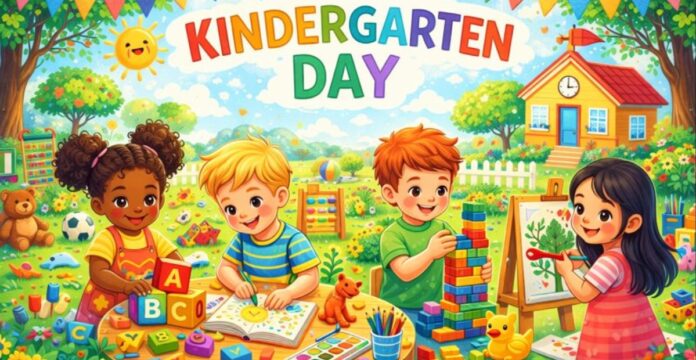
Kindergarten Day is celebrated every year on April 21. It honors the importance of early childhood education and recognizes the role of teachers who shape young minds.
This special day highlights how kindergarten builds a strong foundation for learning, creativity, and social skills.It’s a time to appreciate the dedicated teachers who nurture young minds and foster a lifelong love of learning. Kindergarten is where children embark on their educational journey, developing essential skills and making lasting memories. Let’s celebrate the joy of learning and the importance of early childhood education!
History of Kindergarten Day
Kindergarten Day is celebrated on the birthday of Friedrich Froebel, who was born on April 21, 1782.Froebel was a German educator who believed that children learn best through play. He is credited with inventing the kindergarten, which he called a “garden for children.” The first Kindergarten Day was celebrated in Germany in 1863, and the tradition has since spread to many other countries around the world. On this day, kindergartens around the world celebrate with special activities, such as songs, games, and stories. It is a day to recognize the importance of early childhood education and the contributions of Friedrich Froebel.
He was a German educator who created the concept of kindergarten in the early 19th century. The word kindergarten means “children’s garden.”His belief was that children should be nurtured and developed in a garden-like environment, where they could grow and learn at their own pace through play and exploration. He designed specific educational materials, known as “gifts” and “occupations,” to stimulate children’s senses and encourage their creativity. These materials included wooden blocks, balls, and other objects that could be used in various ways to promote learning and development.
Froebel believed that children learn best through play, creativity, and hands-on activities. His ideas changed education forever and still influence classrooms today.
Why Kindergarten Is Important
Kindergarten plays a key role in a child’s development. It is often the first step in formal education.
Here’s why it matters:
- Builds Social Skills
Children learn how to share, communicate, and work in groups. - Encourages Creativity
Activities like drawing, singing, and storytelling help imagination grow. - Develops Basic Skills
Kids learn letters, numbers, shapes, and simple problem-solving. - Boosts Confidence
A supportive environment helps children feel safe and confident. - Promotes Emotional Growth
Children learn how to manage emotions and build friendships.
Fun Ways to Celebrate Kindergarten Day
You can celebrate Kindergarten Day in simple and joyful ways:
1. Organize Creative Activities
Let children enjoy painting, crafts, or music. Creativity is the heart of kindergarten learning.
2. Storytelling Time
Teachers and parents can read fun and educational stories to children.
3. Role-Playing Games
Kids love pretending. It helps them learn communication and problem-solving.
4. Outdoor Learning
Take lessons outside. Nature-based activities are fun and educational.
5. Appreciate Teachers
Say thank you to kindergarten teachers for their hard work and dedication.
Kindergarten Teaching Philosophy
Kindergarten is not just about books. It focuses on learning through play.
Froebel introduced tools called “gifts” and “occupations.” These included blocks, shapes, and creative materials.
Today, modern kindergarten still follows these ideas. It blends play with structured learning.
Kindergarten Around the World
Kindergarten systems differ across countries, but the goal remains the same—help children grow.
- In the United States, kindergarten is part of the formal school system.
- In Germany, it focuses more on play-based learning.
- In Japan, children learn discipline and teamwork early.
Each country adds its own style, but all value early education.
Final Thoughts
Kindergarten Rosa Parks Day reminds us that learning begins early. It is a time to celebrate curiosity, creativity, and growth.
A strong start in kindergarten can shape a child’s future. So, whether you are a parent, teacher, or student, take a moment to appreciate this important stage of life.