
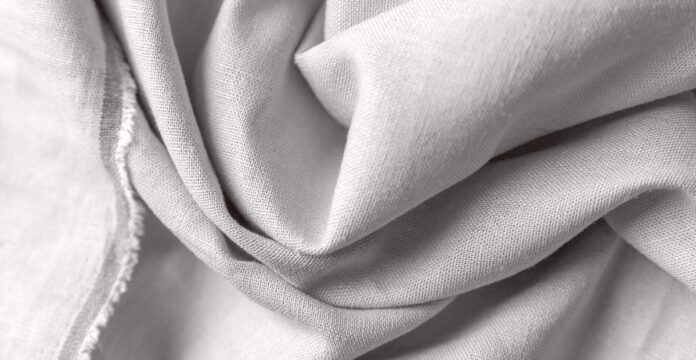
Recycled Cashmere Twill fabric wool is the perfect combination of sustainability, craftsmanship and timeless luxury. Cashmere is traditionally associated with warmth, softness and exclusivity. As environmental awareness grows, the textile industry is changing. Recycled cashmere twill is a sustainable alternative to traditional fabrics that offers premium quality and reduces environmental impact.
Recycled Cashmere Twill Fabric weaving also enhances the durability of recycled cashmere and its texture, making it ideal for refined and structured designs. Designers and manufacturers are increasingly choosing recycled cashmere fabric in twill weave to adhere to eco-conscious values, without compromising on elegance.
This comprehensive guide will explain what recycled cashmere fabric is, the process of its production, its applications, benefits, sustainability, and why this fabric is so popular in fashion.
What is recycled cashmere twill fabric?
Recycled Cashmere Twill Fabric is made of reclaimed fibers. They are spun and woven in a twill design. Twill weave produces a diagonal rib design that increases strength and drape. The fabric is therefore more durable while still retaining its softness.
Cashmere fibres are typically sourced from:
- Post-consumer garments
- Making scraps
- Extra production materials
These fibers are then sorted according to color, cleaned and mechanically processed to create new yarns. Blending with a small amount of virgin fibers can improve durability in many cases. So, performance without compromise is possible.
The Twill Weave – Structure and Strength
The diagonal lines of the twill structure are formed by warp and weft offset threads. The fabric benefits from:
- Durability increases
- More wrinkle resistance
- Better drape
- Enhance texture
Twill fabrics are more resistant to tears than plain weave fabrics. Recycled cashmere twill fabrics are therefore ideal for tailor-made garments and outerwear.
The diagonal pattern also adds depth to the garment. This fabric makes garments look more structured and luxurious.
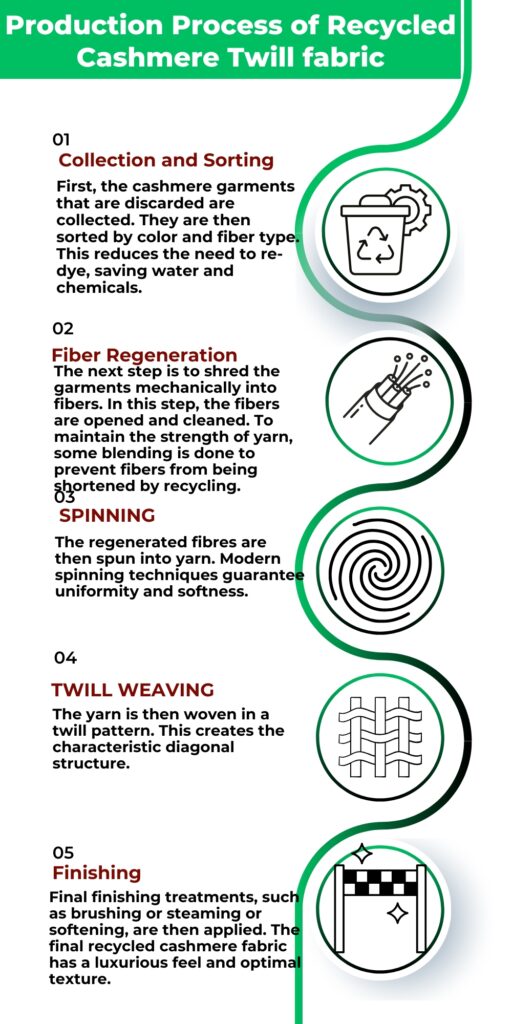
Production Process of Recycled Cashmere Twill fabric
1. Collection and Sorting
First, the cashmere garments that are discarded are collected. They are then sorted by color and fiber type. This reduces the need to re-dye, saving water and chemicals.
2. Fiber Regeneration
The next step is to shred the garments mechanically into fibers. In this step, the fibers are opened and cleaned. To maintain the strength of yarn, some blending is done to prevent fibers from being shortened by recycling.
3. Spinning
The regenerated fibres are then spun into yarn. Modern spinning techniques guarantee uniformity and softness.
4. Twill Weaving
The yarn is then woven in a twill pattern. This creates the characteristic diagonal structure.
5. Finishing
Final finishing treatments, such as brushing or steaming or softening, are then applied. The final recycled cashmere fabric has a luxurious feel and optimal texture.
The benefits of recycled cashmere twill fabric
1. The Sustainability of the Economy
Environmental responsibility is one of the main advantages. Recycled cashmere reduces the need to produce new raw materials because it reuses existing fibers. Therefore:
- Reduced water consumption
- Carbon emissions can be minimized
- Diverting textile waste from landfills
2. Luxurious Softness
The softness of the recycled fibers is still impressive. Modern processing techniques make sure that the fibers are handled with care. The comfort of the fabric is therefore preserved.
3. Enhanced Durability
The twill weave increases strength. So, clothes last longer and are resistant to daily wear.
4. Cost Efficiency
Recycled cashmere twill, while maintaining a premium look, can be more cost effective than virgin cashmere. Brands can achieve luxury positioning with optimized production costs.
5. Ethical Appeal
Customers are increasingly choosing sustainable alternatives. Brands that use recycled cashmere fabric have a competitive edge in eco-conscious markets.
Environmental Impact Comparison
Recycled cashmere twill fabric reduces the environmental impact of cashmere production by a significant amount.
Virgin Cashmere Challenges:
- Overgrazing in certain regions
- Water consumption
- Carbon intensive processing
Recycled cashmere advantages:
- Lower resource extraction
- Reduced environmental footprint
- Existing materials can be extended to a longer lifecycle
In this way, the circular fashion model is supported by choosing cashmere twill.
Recycled Cashmere Twill Fabric
1. Overcoats and Coats Tailored to Your Measure
Recycled cashmere twill has a structure that makes it ideal for tailor-made coats. The diagonal weave gives the garment firmness. The garment will retain its shape.
2. Blazers and Jackets
Blazers are made from this fabric. It is not only elegant, but also drapes beautifully.
3. Luxury Trousers
The twill weave also enhances the comfort of trousers. Softness and durability are combined.
4. Accessories and Scarves
Scarves can be made from lightweight versions. This provides warmth and refinement.
5. Sustainable Fashion Collections
Eco-luxury labels incorporate recycled cashmere fabric into capsule collections. Sustainability becomes the core message of marketing.
Texture and performance characteristics
The fabric is made from recycled cashmere and has several unique properties.
- Soft Hand Feel
- Moderate stretch
- Breathability
- Insulation
- Wrinkle resistance
It is also well suited to cold climates and transitional ones. It is therefore suitable for both autumn and winter collections.
Care Instructions
The life of recycled cashmere fabric can be extended with proper care.
- Dry Clean Recommended
- Handwash in cold water, if necessary
- Dry flat
- Avoid wringing
- Fold and store to prevent stretching
Cashmere is delicate and should be handled with care.
Market Trends and Demand
Globally, sustainable textiles are on the rise. The consumer is becoming more informed about the supply chain. Recycled cashmere twill fabrics are in line with:
- Source with ethical consideration
- Slow motion movement
- Luxury Sustainability
Transparency in production also increases trust in brands. Businesses that invest in cashmere recycled will strengthen their customer base.
Recycled cashmere twill vs. other fabrics
Virgin Cashmere is a superior alternative.
- Lower environmental impact
- Similar softness
- Due to the twill structure, it is slightly stronger.
Compare Wool Twill
- Softer texture
- Lighter weight
- More luxurious feel
Synthetic Fabrics
- Biodegradable
- Breathable
- Natural insulation
Recycled cashmere twill stands out as an environmentally friendly option.
Why designers prefer recycled cashmere twill
Designers value versatility. Twill gives structure to tailored garments. Brand identity is also strengthened by sustainability stories.
Luxury consumers also seek exclusivity while maintaining a sense of responsibility. The recycled cashmere fabric meets both of these expectations.
Fashion Brands: Investment Value
It can be strategic to invest in cashmere twill fabrics made from recycled material. It positions brands in the sustainable luxury segment. It appeals to buyers who are environmentally conscious. Thirdly, it distinguishes the collections from mass-market alternatives.
As a result, brand equity on a long-term basis is enhanced.
Circular Economy: Future Perspective
Textiles are circular. Recycled cashmere twill plays an important role. Waste is reduced by extending the fibers’ lifecycle.
Technological innovations are also improving the quality of fibers. Cashmere fabrics made from recycled material are now comparable to those made with virgin materials.
Demand is expected to increase in the next few years. As a result, manufacturers who invest in recycled systems will be leading the sustainable fashion movement.
Consider Quality When Purchasing
Consider these factors when sourcing recycled cashmere fabric twill:
- Fiber blend percentage
- Weave density
- GSM (grams/square meter)
- Finishing treatments
- Supplier certifications
Request fabric samples prior to bulk orders. This will ensure consistency in quality.
Challenges and Solutions
Challenge: Fiber Shortening
Recycling fibers reduces their strength. Blending techniques, however, improve strength.
Challenge: Perceptions of lower quality
Some consumers believe that recycled materials are of inferior quality. Education and transparency can correct these misconceptions.
Challenge: Limited Supply
Raw material availability is crucial to the production of high-quality recycled Cashmere. Strong supply chains are therefore essential.
Conclusion:
Recycled Cashmere Twill Fabric is the embodiment of sustainable luxury. It is not only soft and sophisticated, but also reduces the environmental impact. The twill weave also enhances durability and structural strength, making it ideal for premium clothing.
Recycled cashmere twill stands out as an elegant and responsible choice in a world where sustainability is becoming a major fashion trend. Brands, designers and consumers are all embracing this innovative fabric.
FAQs
What is recycled cashmere twill fabric?
Recycled cashmere twill fabric is made from reclaimed cashmere fibers that are re-spun and woven in a twill pattern, creating a durable, soft, and sustainable textile.
Is recycled cashmere twill fabric as soft as virgin cashmere?
Yes, modern recycling techniques preserve softness. Although fibers are processed, high-quality finishing ensures a luxurious hand feel.
What makes twill weave special in cashmere fabric?
The twill weave creates a diagonal rib pattern that improves durability, wrinkle resistance, and structure, making it ideal for tailored garments.


