
A Heavyweight Insulated Winter Coat is a thick, highly insulated outerwear designed for extreme cold temperatures. It uses high-fill insulation materials that trap body heat effectively. These coats often include windproof shells, thermal linings, and weather-protection features. In addition, they usually come in longer lengths like parkas for more coverage.A Heavyweight Insulated Winter Coat Explained simply means a coat built to handle freezing climates. It performs best in strong winds, snowfall, and long outdoor exposure. It offers far more warmth than normal winter jackets. That is why it becomes essential in harsh environments.
Heavyweight insulation matters because extreme cold drains body heat quickly. If you lose heat fast, you risk hypothermia and frostbite. Therefore, a heavyweight coat acts as a protective barrier. It keeps your core temperature stable for longer periods.
History Of Heavyweight Insulated Winter Coat
The history of heavyweight insulated winter coats begins with the basic human need to survive extreme cold. Long before modern fabrics existed, people living in freezing regions relied on animal skins, fur, and thick wool garments to stay warm. Early Arctic communities, including Inuit groups, created heavy outerwear using seal skin and caribou fur. These natural materials trapped air effectively and protected the body from icy winds. Heavyweight Insulated Winter Coat Explained:Since survival depended on warmth, these coats were designed for function rather than fashion. Over time, these early designs influenced modern winter coat construction.
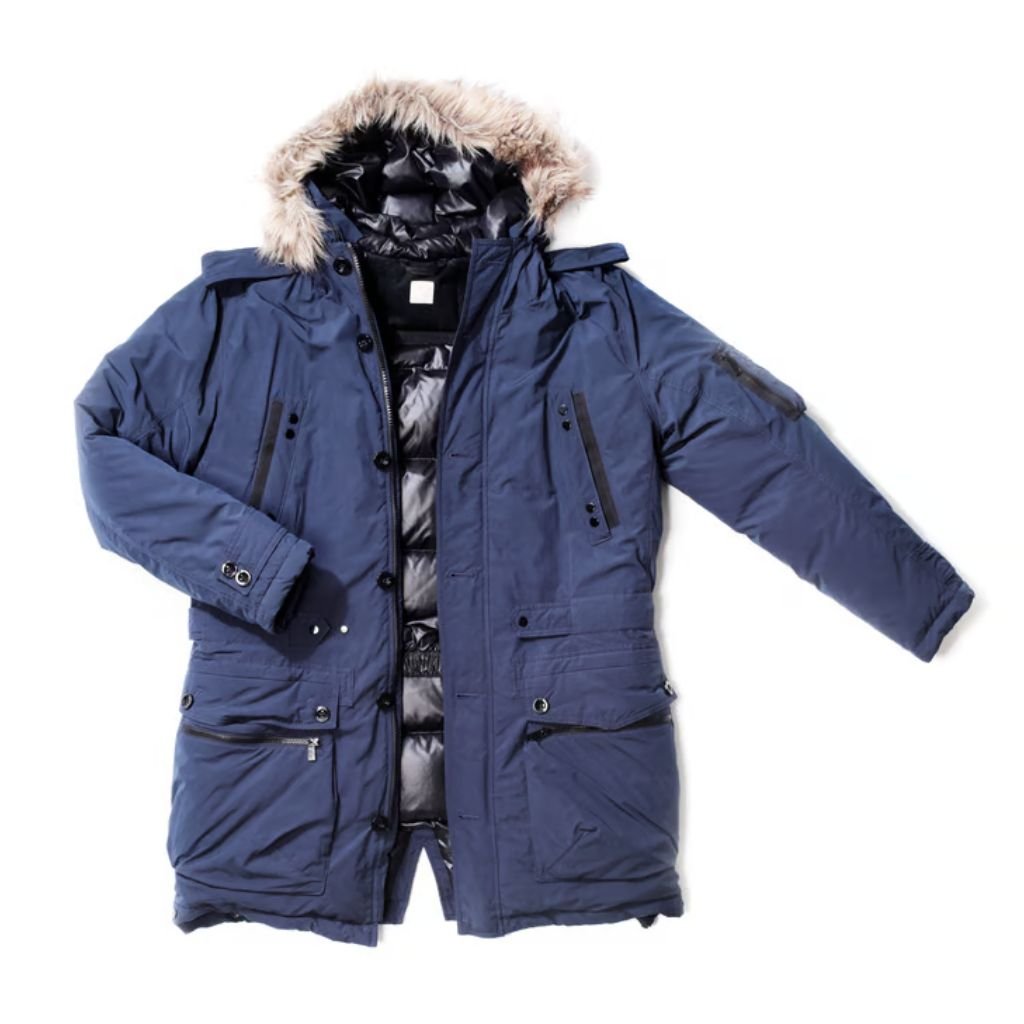
Heavyweight Insulated Winter Coat Explained: What Makes a Coat “Heavyweight”?
A coat becomes “heavyweight” mainly due to its insulation thickness and material density. Manufacturers measure insulation in grams per square meter (GSM). Higher GSM means more insulation packed into the coat. As a result, the coat traps more air and retains more heat.
Most lightweight coats range between 60 to 100 GSM. Heavyweight Insulated Winter Coat Explained:Midweight jackets often sit between 100 and 200 GSM. However, heavyweight winter jackets usually exceed 200 GSM. Some expedition coats even go above 300 GSM. That difference directly impacts warmth performance.
Heavyweight coats also feel bulkier because they include extra protective layers. They may include thicker linings, stronger shells, and reinforced seams. Therefore, the weight increases, but the protection improves. That is the trade-off most buyers accept.
Temperature ratings also help define heavyweight coats. Heavyweight Insulated Winter Coat Explained:Many are designed for 0°F to -30°F (-18°C to -34°C) conditions. Some extreme cold winter coats can handle even lower temperatures. Still, wind chill and humidity also affect warmth levels.
Types of Heavyweight Insulated Winter Coats
Heavyweight insulated winter coats come in different types, and each one serves a specific winter need. Some coats focus on extreme warmth for polar conditions, while others balance warmth with daily comfort. Heavyweight Insulated Winter Coat Explained:Since climate and lifestyle vary, manufacturers design coats with different lengths, insulation levels, and shell materials.
Heavyweight Parka Coat
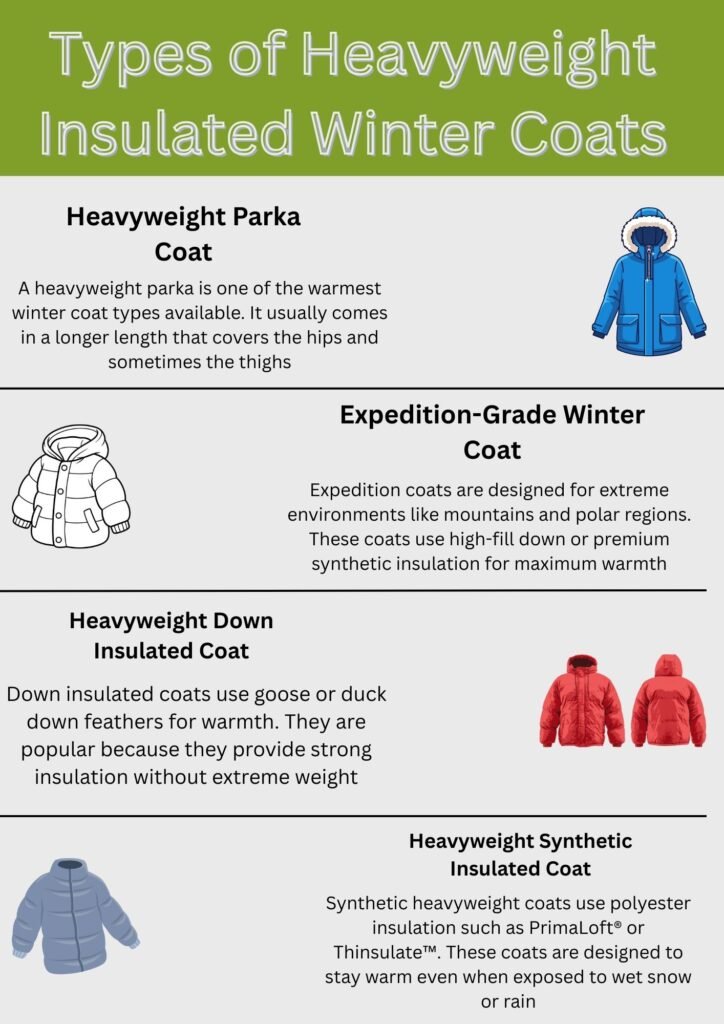
A heavyweight parka is one of the warmest winter coat types available. It usually comes in a longer length that covers the hips and sometimes the thighs. Because of this extra coverage, it blocks cold wind from reaching the lower body. Most parkas include thick insulation, a large hood, and storm cuffs for sealing warmth.
Expedition-Grade Winter Coat
Expedition coats are designed for extreme environments like mountains and polar regions. These coats use high-fill down or premium synthetic insulation for maximum warmth. They often include windproof shells, reinforced stitching, and large insulated hoods. Since expedition travelers face harsh wind chill, these coats focus heavily on full-body heat protection.
Heavyweight Down Insulated Coat
Down insulated coats use goose or duck down feathers for warmth. They are popular because they provide strong insulation without extreme weight. Most heavyweight down coats use 700 to 900+ fill power, which increases loft and heat retention. However, down coats perform best in dry cold conditions because moisture reduces down efficiency.
Heavyweight Synthetic Insulated Coat
Synthetic heavyweight coats use polyester insulation such as PrimaLoft® or Thinsulate™. These coats are designed to stay warm even when exposed to wet snow or rain. Since synthetic fibers resist moisture, they dry faster and remain reliable in harsh winter conditions.
Heavyweight Insulated Winter Coat Explained: Key Features
A heavyweight coat does not rely on insulation alone. It also depends on smart design features that block cold air. These features improve heat retention and comfort. That is why premium coats include advanced construction details.
Below are the most important features you should look for. Heavyweight Insulated Winter Coat Explained:These details separate a true extreme cold winter coat from a normal jacket.
Key Features (Bullet Points for SEO)
- Thermal lining for heat reflection and warmth retention
- Windproof outer shell to stop cold air penetration
- Water-resistant or waterproof fabric for snow and wet storms
- Adjustable insulated hood for head and neck protection
- Storm cuffs and draft collars to block airflow gaps
- Multiple insulated pockets to protect hands and store items safely
- Two-way zipper and storm flap for better movement and sealing
- Longer parka length for extra coverage in deep cold
Thermal lining plays a major role in comfort. It prevents heat loss and improves overall warmth. Windproof shells also help because wind removes body heat quickly. Therefore, wind protection becomes essential in blizzard conditions.
Waterproof fabrics protect you in heavy snow and slush. Heavyweight Insulated Winter Coat Explained:Meanwhile, water-resistant coats work better for dry snow. Adjustable hoods and cuffs help seal warmth inside. As a result, you stay protected even in strong winds.
How Warm Is a Heavyweight Insulated Winter Coat?
A heavyweight insulated coat can handle extreme cold temperatures with ease. Most models perform best between 0°F to -30°F (-18°C to -34°C). Expedition-grade coats may go lower, depending on insulation and layering.
However, warmth also depends on wind chill. Wind can make -5°F feel like -25°F quickly. Heavyweight Insulated Winter Coat Explained:Therefore, a windproof shell becomes just as important as insulation. If the coat blocks wind well, it feels much warmer.
Layering compatibility also improves warmth. Heavyweight coats work best with thermal base layers and fleece mid-layers. That layering system traps more warm air. As a result, you stay comfortable for long outdoor hours.
Compared to regular winter coats, heavyweight coats feel far warmer. Standard jackets may work for 20°F to 40°F weather. However, they fail in deep cold.Heavyweight Insulated Winter Coat Explained: That is why a heavyweight coat becomes necessary in harsh winters.

Heavyweight vs Midweight vs Lightweight Winter Coats
Choosing the right winter coat depends on climate and daily needs. Many people buy the wrong weight category and regret it. Therefore, comparing coat weights helps you make the right decision.
| Feature | Lightweight | Midweight | Heavyweight |
| Insulation | Low | Medium | Hight |
| Best For | Mild winter | Cold weather | Extreme cold |
| Weight | Light | Moderate | Heavy |
| Breathability | High | Medium | Lower |
| Coverage | Short | Medium | Often long |
Lightweight jackets work best for short trips and mild cold. Midweight coats suit typical winter cities. However, heavyweight winter jackets are built for deep freezes.Heavyweight Insulated Winter Coat Explained: Therefore, they offer the highest warmth but less airflow.
Best Uses of Heavyweight Insulated Winter Coats
Heavyweight insulated winter coats are designed for extreme cold conditions where regular jackets fail to provide enough warmth. They offer thick insulation, wind-blocking layers, and strong outer shells that protect the body from freezing air.Heavyweight Insulated Winter Coat Explained: Because of their high heat retention, these coats work best in harsh winter climates and demanding outdoor situations. In addition, they provide comfort during long hours outside, even when temperatures drop below zero. That is why they are considered essential winter gear for people who face severe cold regularly.
Extreme Winter Climates and Sub-Zero Regions
Heavyweight insulated winter coats perform best in regions where winter stays long and brutal. These coats help the body maintain warmth even when temperatures fall below 0°F (-18°C).Heavyweight Insulated Winter Coat Explained: Since extreme cold quickly drains body heat, thick insulation becomes necessary for survival and comfort. Moreover, these coats often include storm flaps and insulated hoods that seal out icy air. Therefore, they are ideal for areas like Canada, Northern Europe, and mountain towns.
Outdoor Work and Construction Jobs
Workers who spend hours outdoors need consistent warmth more than anyone. Heavyweight coats help construction workers, delivery drivers, and road crews stay protected in freezing winds. Since these jobs often involve standing still, the body produces less heat naturally. As a result, a high insulation winter coat becomes essential for preventing cold stress.Heavyweight Insulated Winter Coat Explained: In addition, many heavyweight coats include durable shells that resist tearing and abrasion. That makes them perfect for demanding job sites and winter labor.
Mountaineering and Winter Expeditions
Mountaineers and expedition travelers face some of the coldest conditions on earth. Heavyweight insulated coats provide critical protection at high altitudes where wind chill becomes dangerous. These coats trap body heat and reduce heat loss during long climbs and rest periods. Heavyweight Insulated Winter Coat Explained:Furthermore, many expedition-grade parkas come with adjustable hoods and reinforced fabric panels. Because weather can change suddenly in the mountains, a heavyweight coat becomes a safety essential. That is why climbers often choose them over regular winter jackets.
Snowstorms and Blizzard Conditions
Snowstorms bring heavy wind, moisture, and rapidly dropping temperatures. A heavyweight insulated winter coat keeps you warm and protected when visibility and conditions become harsh. Heavyweight Insulated Winter Coat Explained:Since blizzards create strong wind chill, windproof shells make a huge difference. Many coats also include storm cuffs that stop snow from entering sleeves. As a result, you stay comfortable even when snow piles up and temperatures fall quickly. Therefore, these coats are a reliable option for storm preparedness and emergency winter travel.
How to Choose the Best Heavyweight Insulated Winter Coat
Choosing the right heavyweight insulated winter coat is important because not every coat suits every climate or lifestyle. Some coats focus on extreme warmth, while others balance warmth with mobility. Since winters can vary greatly by region, you should always match the coat to your temperature needs. In addition, your daily activities matter because a coat for hiking differs from one for standing outdoors. Heavyweight Insulated Winter Coat Explained:That is why selecting the best coat requires checking insulation, shell material, fit, and comfort features. A smart choice ensures you stay warm, dry, and protected all winter long.
Consider Your Climate and Winter Temperature Range
The first step is understanding your local winter conditions. If your area regularly drops below 0°F (-18°C), you need a true heavyweight insulated coat. These coats are built to trap heat in severe cold and reduce the risk of frostbite. However, if winters stay around 20°F (-6°C), a midweight coat might be enough. Heavyweight Insulated Winter Coat Explained:Therefore, checking average winter temperatures helps you avoid buying a coat that feels too hot. Choosing the correct warmth level ensures comfort without overheating.
Match the Coat to Your Activity Level
Your activity level changes how warm you feel in winter. If you walk, hike, or work actively, your body produces heat naturally. In that case, you may need a coat with better breathability to prevent sweating. However, if you spend long hours standing outdoors, you need maximum static warmth. Heavyweight Insulated Winter Coat Explained:That is why workers, security guards, and delivery drivers often need heavyweight insulation. A good coat should match your movement level so you stay warm without feeling trapped.
Choose the Right Insulation Type (Down vs Synthetic vs Hybrid)
Insulation type plays a major role in performance. Down insulation provides excellent warmth with lighter weight, making it ideal for dry and freezing climates. However, down performs poorly when wet, so it requires careful use. Synthetic insulation works better in wet snow and rainy winter conditions because it stays warm even when damp. Hybrid insulation combines both, offering warmth and moisture protection together. Heavyweight Insulated Winter Coat Explained:Therefore, you should choose insulation based on your weather conditions and lifestyle needs.
Check Insulation Weight and Fill Power
A heavyweight coat should have strong insulation levels. Synthetic insulation is often measured in GSM, and higher GSM means better warmth retention. Down insulation uses fill power ratings, usually ranging from 600 to 900+. Higher fill power provides more loft and warmth with less bulk. Therefore, if you want serious warmth, look for 700+ fill down or high-GSM synthetic insulation. This feature matters most in extreme cold climates where heat loss happens quickly.
Pros and Cons of Heavyweight Insulated Winter Coats
Heavyweight winter coats provide serious benefits. However, they also come with drawbacks. Therefore, you should understand both sides before buying.
Pros
Maximum warmth is the biggest advantage. These coats protect you in deep cold climates. They also block wind effectively, which prevents sudden heat loss. In addition, many models offer long-lasting durability and strong materials.
Heavyweight coats also provide better comfort during long outdoor exposure. Workers and travelers benefit greatly from this protection. Heavyweight Insulated Winter Coat Explained:Therefore, they improve safety and reduce cold stress.
Cons
The main disadvantage is weight. Heavyweight coats can feel bulky and tiring. They also feel less breathable, especially during movement. As a result, they can cause overheating in mild winters.
They also take more space in storage and luggage. In addition, high-end models can cost more. Therefore, they suit serious winter users more than casual buyers.

Maintenance & Care Tips
Proper maintenance is essential if you want your heavyweight insulated winter coat to stay warm and comfortable for years. Even the best coat can lose insulation power if you wash it incorrectly or store it the wrong way. Since insulation works by trapping air, keeping the material fluffy and clean matters a lot.Heavyweight Insulated Winter Coat Explained: In addition, dirt and body oils can reduce breathability and lower warmth performance. That is why regular care protects both the outer shell and the inner insulation. With the right cleaning routine, your coat will continue to perform well in harsh winter weather.
Read the Care Label Before Washing
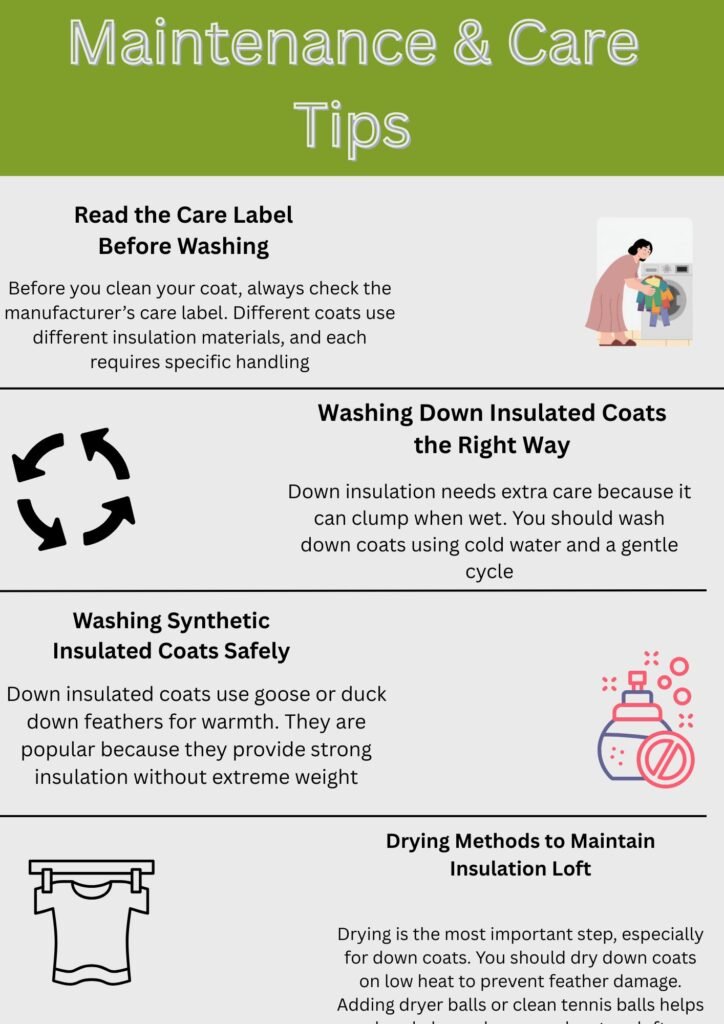
Before you clean your coat, always check the manufacturer’s care label. Different coats use different insulation materials, and each requires specific handling. Some coats allow machine washing, while others need professional cleaning. If you ignore the instructions, you may damage the shell fabric or ruin the insulation loft. Therefore, reading the label first prevents expensive mistakes.Heavyweight Insulated Winter Coat Explained: It also ensures the coat stays in good condition for long-term use.
Washing Down Insulated Coats the Right Way
Down insulation needs extra care because it can clump when wet. You should wash down coats using cold water and a gentle cycle. A down-specific detergent works best because regular detergent strips natural oils from feathers. Heavyweight Insulated Winter Coat Explained:If the oils disappear, the down loses its softness and warmth.
Washing Synthetic Insulated Coats Safely
Synthetic insulation is easier to clean than down, which makes it popular for daily winter wear. You can usually machine wash synthetic coats with mild detergent and cold water. However, you should avoid strong detergents and fabric softeners because they reduce insulation performance.
Drying Methods to Maintain Insulation Loft
Drying is the most important step, especially for down coats. You should dry down coats on low heat to prevent feather damage. Adding dryer balls or clean tennis balls helps break down clumps and restore loft. If down stays damp, it may develop odor and lose warmth.Heavyweight Insulated Winter Coat Explained: Synthetic coats also dry best on low heat because high heat can melt fibers.
Are Heavyweight Insulated Winter Coats Worth It?
A heavyweight coat costs more than a regular winter jacket. However, it delivers better warmth and stronger protection. Therefore, the value depends on your climate and lifestyle.
If you live in a region with long winters, it becomes a smart investment. It reduces the need for multiple layers and extra accessories.Heavyweight Insulated Winter Coat Explained: It also protects your health during freezing weather. Over time, that benefit becomes priceless.
Workers who spend hours outside also gain long-term value. A cheap coat may fail within one season. Meanwhile, a durable heavyweight coat can last many years. Therefore, it often saves money in the long run.
However, if you live in a mild climate, it may not be worth it. It will sit unused most of the year. In that case, a midweight coat makes more sense.
Conclusion
A Heavyweight Insulated Winter Coat Explained comes down to one simple truth: this coat is built for serious cold. Heavyweight Insulated Winter Coat Explained:It provides maximum insulation, strong wind blocking, and reliable winter protection. Therefore, it becomes a must-have for harsh climates.
You should buy a heavyweight coat if you live in sub-zero regions. It also suits outdoor workers, winter travelers, and mountaineers. In addition, it works well for anyone who struggles with cold easily.
FAQs
What temperature is a heavyweight winter coat for?
A heavyweight winter coat is usually designed for 0°F to -30°F (-18°C to -34°C). Some expedition coats handle even colder weather. Wind chill and layering also affect performance.
Is heavyweight insulation too warm?
Yes, it can feel too warm in mild winters. If temperatures stay above 25°F (-4°C), you may overheat. Therefore, it works best for freezing climates and long outdoor exposure.
Can I wear it in snow and rain?
Yes, most heavyweight coats handle snow very well. Many models include DWR coatings or waterproof shells. However, down coats need extra protection in heavy rain.
How heavy is a heavyweight insulated coat?
Most heavyweight coats weigh between 1.5 to 3.5 pounds (0.7 to 1.6 kg). Expedition parkas can weigh more. Materials and insulation type control the weight.