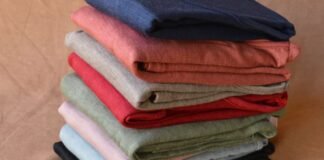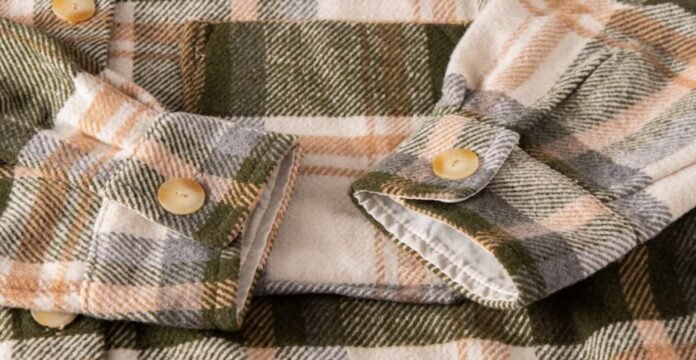
Sherpa lined fabric is a soft, fluffy lining that feels like sheepskin. It is mostly used inside jackets, hoodies, and blankets. This lining adds warmth without adding heavy weight. Because of its cozy texture, many people prefer it for winter wear.
In this Sherpa Lined Fabric Guide, you will learn why it stays popular every year. Sherpa lining provides insulation by trapping warm air near the body. As a result, it helps you stay comfortable in cold weather. It also feels gentle on the skin, which makes it ideal for daily use.
Moreover, Sherpa lined products look stylish and feel luxurious. People often choose Sherpa for comfort at home and outdoors. That is why it works well for clothing, bedding, and accessories.
History of Sherpa Lined Fabric (How It Became Popular)
Sherpa fabric got its name from the Sherpa people of Nepal. These people live in cold mountain regions near the Himalayas. They are known for wearing thick wool clothing to survive harsh weather. Over time, fashion brands borrowed the name because Sherpa lining gives a similar warm feeling.
In the past, real sheepskin and wool were common winter materials. However, they were expensive and needed special care. Because of that, manufacturers started producing synthetic Sherpa. It offered the same fluffy look but at a lower price.
Soon, Sherpa lined jackets became trendy in Europe and America. People loved the soft inner lining and rugged outer style. Later, Sherpa moved into blankets, slippers, and home décor. As a result, Sherpa became a winter essential worldwide.
Today, Sherpa is used in modern streetwear and outdoor clothing. At the same time, it remains a top choice for cozy home products.
What Is Sherpa Fabric Made Of? (Sherpa Lining Composition)
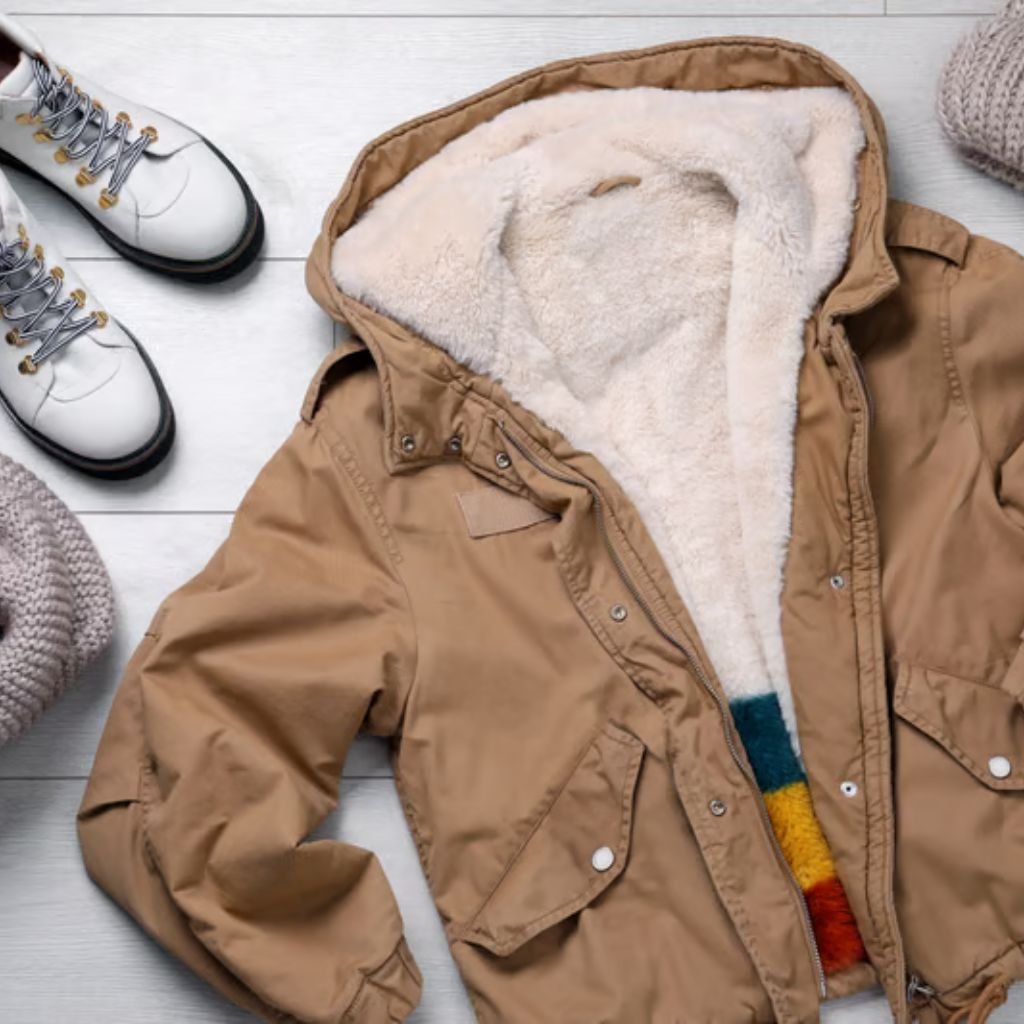
Sherpa fabric is usually made from synthetic fibers. Most brands use polyester because it is durable and affordable. Sometimes, acrylic is added to improve softness and texture. Some Sherpa fabrics also include cotton blends for better breathability.
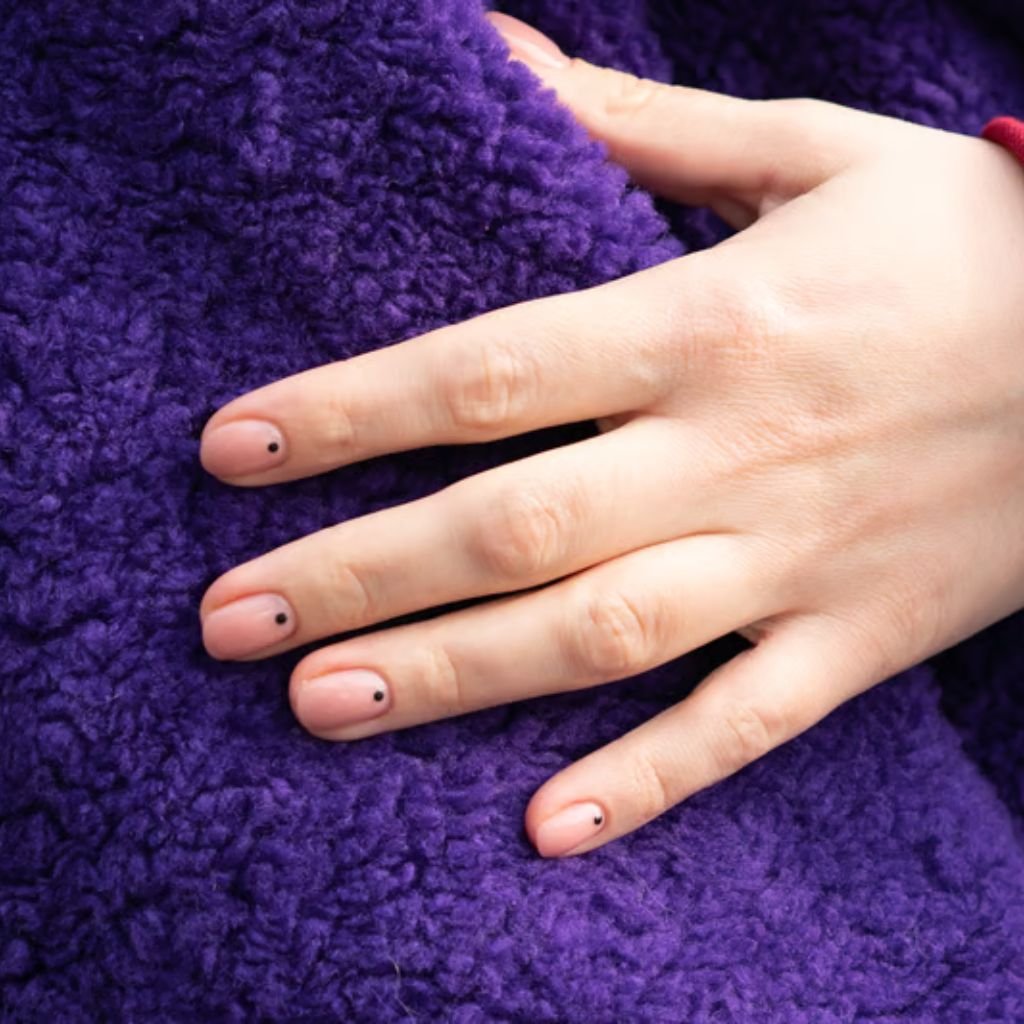
Sherpa mimics real sheepskin by copying its curly, fluffy surface. The fibers are brushed and raised during production. This process creates a thick pile that feels soft and warm. As a result, Sherpa looks like wool but costs much less.
Polyester Sherpa (Most Common Material)
Polyester Sherpa is lightweight and strong. It holds warmth well and resists shrinking. Because it dries fast, it is also easy to maintain. Many winter jackets use polyester Sherpa lining for daily wear.
Acrylic Sherpa (Extra Soft Option)
Acrylic Sherpa feels very plush and smooth. It often gives a more “wool-like” appearance. However, it may pill faster if used heavily. Still, many blankets and throws use acrylic Sherpa.
Cotton Blend Sherpa (More Breathable Choice)
Cotton blend Sherpa includes cotton mixed with synthetic fibers. It feels softer on sensitive skin. Also, it allows more airflow compared to pure polyester. Because of that, it works well for indoor hoodies and casual wear.
Natural vs Synthetic Sherpa
Natural Sherpa uses wool and natural fibers. It feels warmer but costs more. It also requires careful washing. Synthetic Sherpa is cheaper and easier to clean. Therefore, most Sherpa products today are synthetic.
How Sherpa Lined Fabric Works (Insulation Explained)
Sherpa lining works through air-trapping insulation.Sherpa Lined Fabric Guide: The fluffy fibers create tiny air pockets. These pockets hold warm air close to your body. As a result, your body heat stays trapped and does not escape quickly.
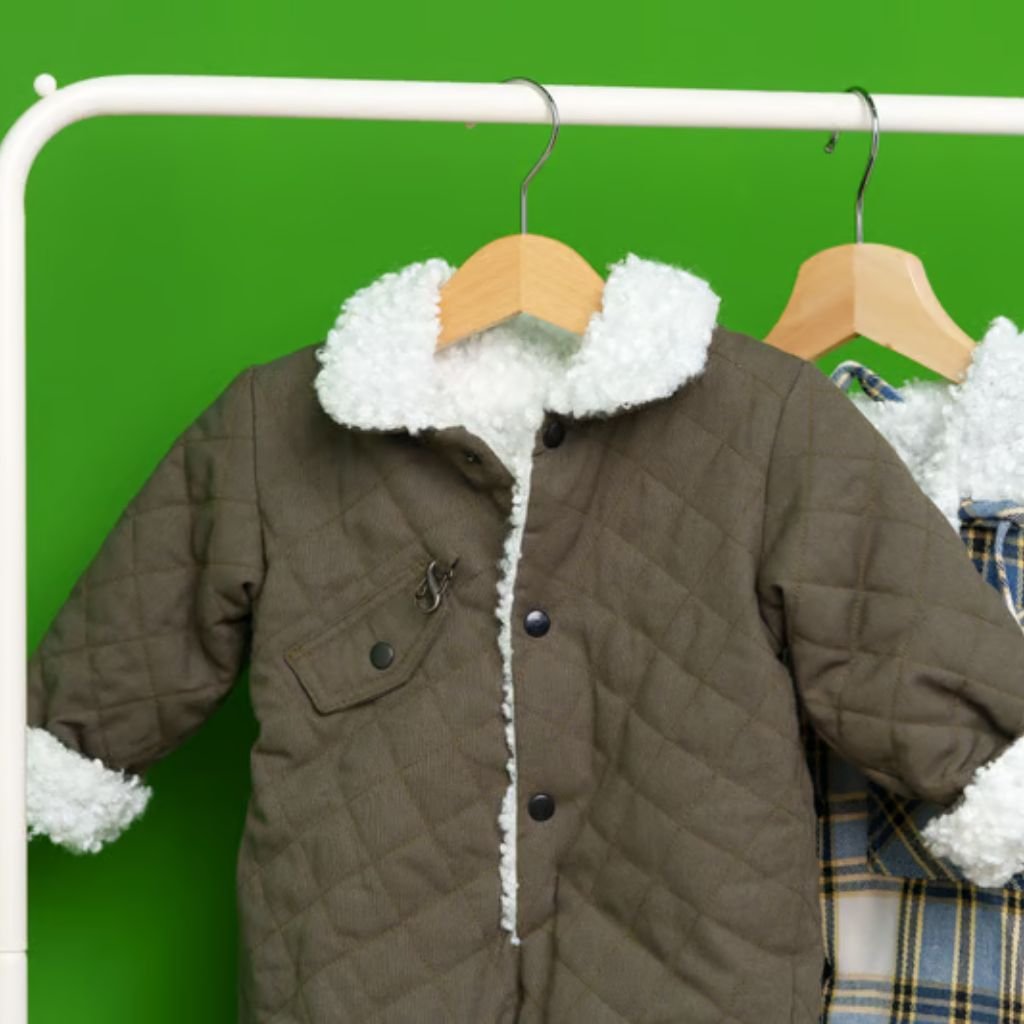
Sherpa also reduces cold air contact with the skin. That makes you feel warmer even in windy weather. However, it works best when paired with an outer layer. Jackets often use Sherpa lining inside denim, canvas, or polyester shells.
Heat Retention Mechanism
Sherpa fibers slow down heat loss. They act as a barrier between your body and cold air. Because of this, Sherpa is great for winter walks and casual outdoor activities.
Air-Trapping Fibers for Warmth
The raised pile structure is the main reason Sherpa insulates well. The thicker the pile, the more air it traps. That is why high-quality Sherpa feels warmer than cheap Sherpa.
Sherpa vs Fleece vs Wool Insulation
Fleece is lighter and dries faster. However, Sherpa feels softer and more cushion-like. Wool provides stronger natural insulation but may itch. Sherpa offers a balanced option with comfort and affordability.
Key Features of Sherpa Lined Fabric Guide (What Makes It Special)
Sherpa lined fabric has several features that make it ideal for winter. Sherpa Lined Fabric Guide:It combines comfort, warmth, and style in one material. Because it is soft and fluffy, it feels relaxing on the body. At the same time, it insulates well against cold air.
Also, Sherpa is flexible and easy to sew into garments. That is why many brands use it in jackets and hoodies. Additionally, Sherpa can be paired with many outer fabrics. This gives designers more creative options.
Below are the most important Sherpa lining features.
Ultra-Soft Texture
Sherpa feels plush and smooth against the skin. It creates a cozy feeling instantly. That is why it is used in blankets and loungewear.
Lightweight Warmth
Sherpa provides strong warmth without heavy bulk. It keeps clothing comfortable for long wear. Therefore, it works well for travel and daily winter use.
Breathability
Sherpa allows some airflow, especially cotton blends. This helps prevent overheating indoors. However, it still keeps enough warmth for cold days.
Moisture Resistance
Synthetic Sherpa resists light moisture. It dries faster than wool. Still, it is not fully waterproof, so it needs an outer shell.
Comfort for Sensitive Skin
Sherpa usually feels gentle and non-irritating. Unlike wool, it does not itch for most people. That makes it a safe option for sensitive skin.
Benefits of Sherpa Lined Fabric (Why People Love It)
Sherpa lining offers comfort that many winter fabrics cannot match. It keeps you warm while staying soft and flexible. Because of that, it is popular in casual winter fashion.Sherpa Lined Fabric Guide: Many people also choose it for blankets and throws.
In this Sherpa Lined Fabric Guide, the benefits matter the most. They explain why Sherpa stays a top winter choice. Also, Sherpa works well for both adults and kids. It provides warmth without discomfort.
Excellent Warmth Without Bulk
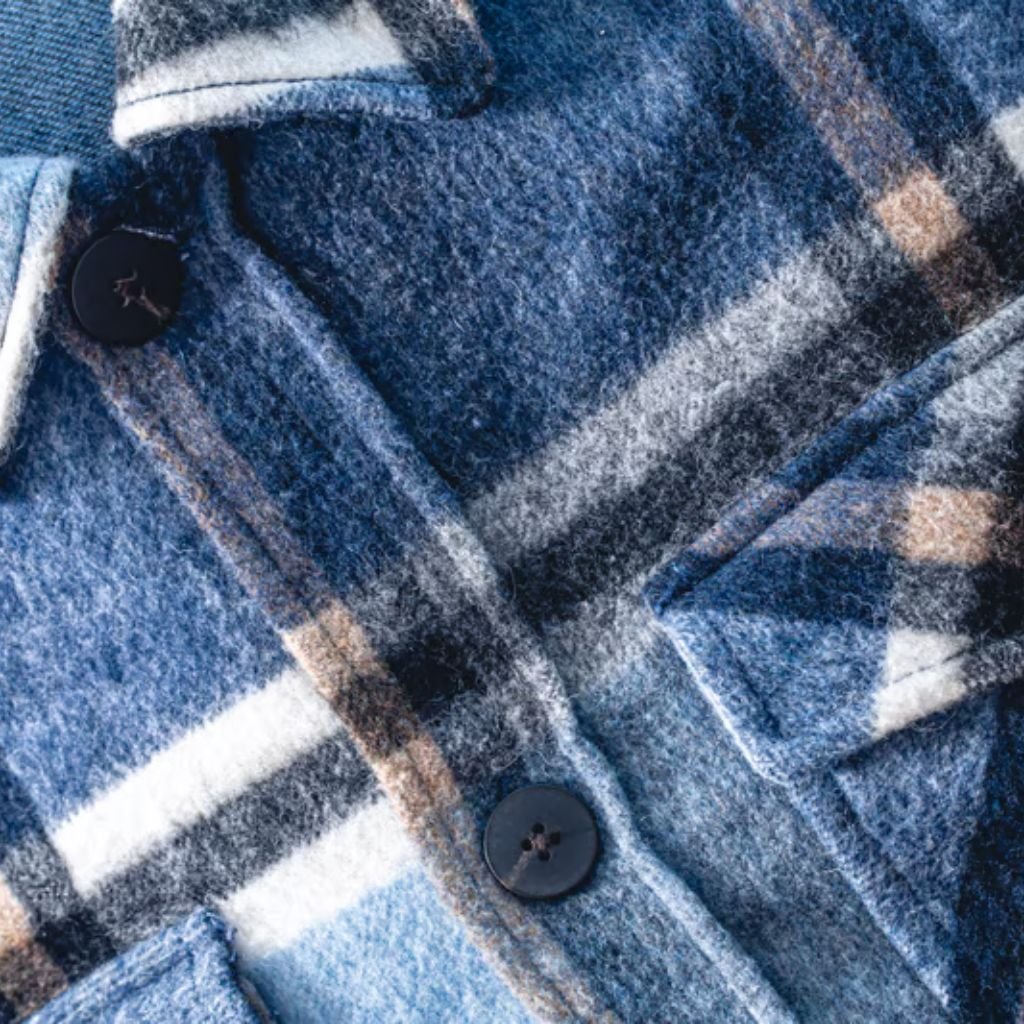
Sherpa traps body heat efficiently. It keeps you warm without thick layering. Therefore, you can move easily while staying comfortable.
Cozy Feel for Cold Climates
Sherpa creates a soft, relaxing warmth. It feels like a blanket wrapped around your body. Because of that, it is perfect for cold mornings and evenings.
Affordable Alternative to Wool
Wool costs more and needs special care. Sherpa provides similar warmth at a lower price. That is why many brands use Sherpa for budget-friendly winter wear.
Easy Maintenance
Most Sherpa fabrics are machine washable. They also dry faster than wool. As a result, Sherpa is easy for daily users.
Sherpa Lined Fabric vs Other Warm Fabrics (Comparison Guide)
Many people compare Sherpa with other winter fabrics. Each fabric has its own benefits. However, Sherpa stands out due to softness and balanced insulation. Sherpa Lined Fabric Guide:This Sherpa Lined Fabric Guide explains key differences clearly.
Sherpa often works best for casual warmth and comfort. On the other hand, wool suits extreme cold better. Faux fur gives style but may feel heavy. Thermal lining works for active wear but lacks plush softness.
Sherpa vs Fleece
Fleece feels smooth and sporty. It is lighter and dries faster. However, Sherpa feels softer and thicker. Sherpa also gives a more luxurious feel.
Sherpa vs Wool
Wool insulates better in wet cold weather. It is also natural and long-lasting. However, wool can itch and shrink easily. Sherpa feels softer and is easier to wash.
Sherpa vs Faux Fur
Faux fur looks stylish and fluffy. Yet, it can feel heavy and trap too much heat. Sherpa feels lighter and more breathable. That makes it better for daily comfort.
Sherpa vs Thermal Lining
Thermal lining is designed for performance clothing. It traps heat but feels thin and less cozy. Sherpa feels warmer to touch and more comforting. However, thermal lining works better for active sports.
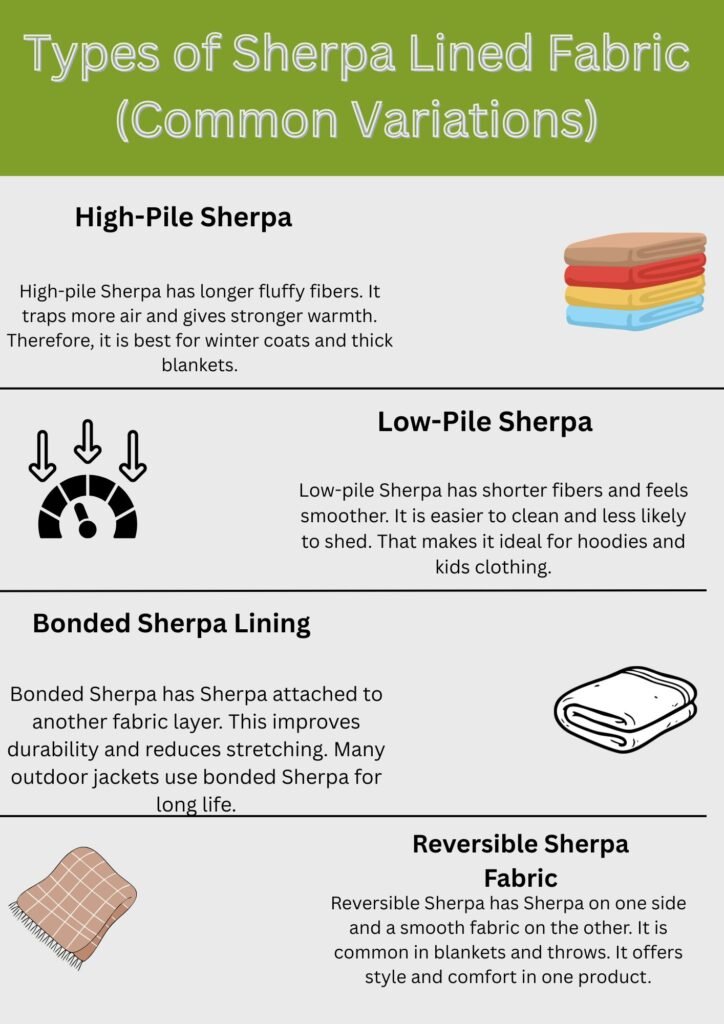
Types of Sherpa Lined Fabric (Common Variations)
Sherpa lining comes in different forms depending on the product. Some Sherpa feels thick and curly, while others feel smooth and fluffy. Sherpa Lined Fabric Guide:The type depends on fiber quality, pile height, and backing fabric.
In this Sherpa Lined Fabric Guide, knowing the types helps you choose better. Some Sherpa works best for jackets, while others fit blankets. Also, some versions resist flattening better than others.
High-Pile Sherpa
High-pile Sherpa has longer fluffy fibers. It traps more air and gives stronger warmth. Therefore, it is best for winter coats and thick blankets.
Low-Pile Sherpa
Low-pile Sherpa has shorter fibers and feels smoother. It is easier to clean and less likely to shed. That makes it ideal for hoodies and kids clothing.
Bonded Sherpa Lining
Bonded Sherpa has Sherpa attached to another fabric layer. This improves durability and reduces stretching. Many outdoor jackets use bonded Sherpa for long life.
Reversible Sherpa Fabric
Reversible Sherpa has Sherpa on one side and a smooth fabric on the other. It is common in blankets and throws. It offers style and comfort in one product.
Common Uses of Sherpa Lined Fabric (Best Applications)
Sherpa lined fabric is used in many winter products.Sherpa Lined Fabric Guide: It works well because it is warm, soft, and stylish. Also, it pairs easily with denim, leather, and polyester shells. That makes it popular in fashion and home décor.
This Sherpa Lined Fabric Guide highlights the most common uses. Sherpa works well for casual outfits and indoor comfort. It also provides extra warmth in footwear and pet products.Sherpa Lined Fabric Guide:
Jackets and Winter Coats
A Sherpa lined jacket is one of the most popular winter pieces. It keeps the chest and back warm. Also, it adds a stylish rugged look.
Hoodies and Sweatshirts
Sherpa lined hoodies provide warmth for daily wear. They are perfect for cold evenings and indoor lounging. Many people prefer them instead of heavy coats.
Blankets and Throws
A Sherpa fabric blanket feels soft and luxurious. It provides strong warmth while staying lightweight. That is why it is popular for bedrooms and sofas.
Boots and Slippers
Sherpa lining in footwear keeps feet warm. It also adds comfort for long wear. However, it should stay dry to avoid damage.
Pet Beds
Pet beds often use Sherpa for comfort. It provides warmth and softness for cats and dogs. Also, it helps pets feel safe and relaxed.
Is Sherpa Lined Fabric Warm Enough for Extreme Cold?
Sherpa lining provides strong warmth, but it has limits. It works best in mild to moderately cold weather. For extreme cold, Sherpa needs proper layering.Sherpa Lined Fabric Guide: Otherwise, cold wind may pass through the outer fabric.
Sherpa lined jackets work well between 0°C to 10°C in many cases. However, this depends on the outer shell and thickness. If the jacket has windproof fabric, Sherpa becomes much more effective.
Temperature Suitability
Sherpa works best for daily winter cold. It handles dry cold weather very well. However, it struggles in wet snow conditions without protection.
Best Layering Combinations
Wear a thermal base layer under Sherpa for extra warmth. Add a windproof outer layer if needed. This combination improves insulation and comfort quickly.
Ideal Climates for Sherpa Lining
Sherpa is ideal for dry winter regions. It also works well for indoor heating environments. Therefore, it is perfect for city winters and casual outdoor use.
Pros and Cons of Sherpa Lined Fabric (Honest Review)
Sherpa lined fabric has many strong advantages. Still, it also has some weaknesses. Knowing both sides helps you make the right buying decision. Sherpa Lined Fabric Guide:This Sherpa Lined Fabric Guide gives a balanced view.
Sherpa is great for comfort and warmth. However, it needs proper care to maintain its fluffy texture. If you wash it incorrectly, it may flatten. Also, low-quality Sherpa may shed quickly.
Pros of Sherpa Lining
Sherpa feels extremely soft and cozy. It offers warmth without heavy weight. Also, it is affordable compared to wool. Most Sherpa fabrics are easy to wash and dry.Sherpa Lined Fabric Guide:
Cons of Sherpa Lining
Sherpa can flatten after repeated washing.Sherpa Lined Fabric Guide: It is not fully waterproof in rainy weather. Some Sherpa also sheds slightly during early use. However, good quality Sherpa reduces these issues.
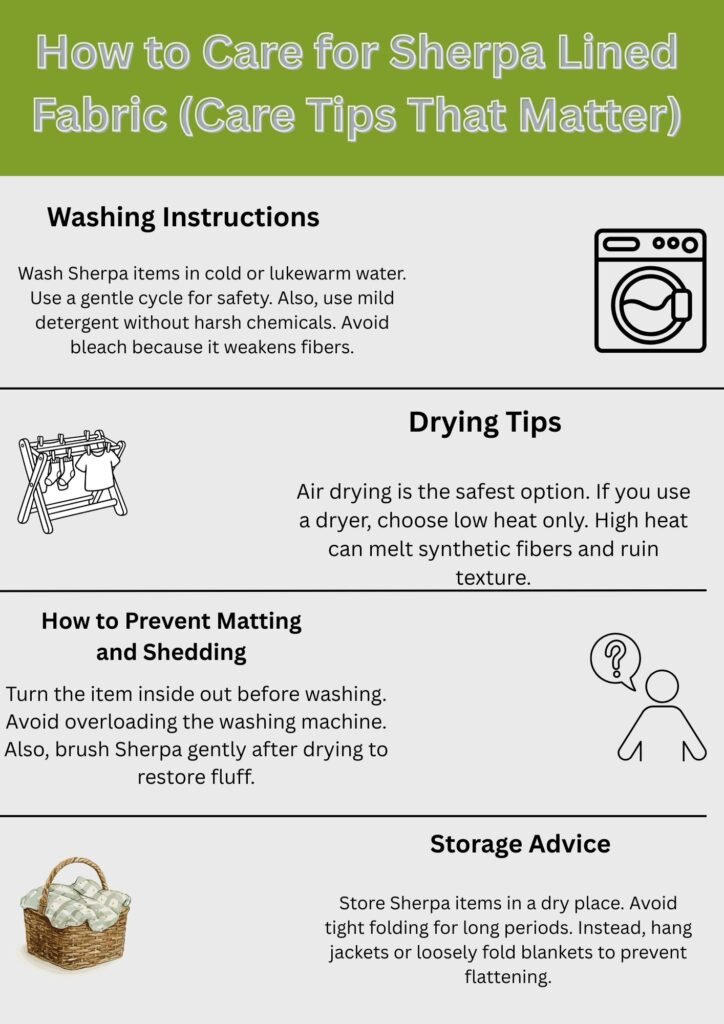
How to Care for Sherpa Lined Fabric (Care Tips That Matter)
Proper care keeps Sherpa fluffy and warm for years. If you wash it incorrectly, it may lose softness. Therefore, you should always follow gentle washing methods. Sherpa requires low heat and mild detergents.
In this Sherpa Lined Fabric Guide, care instructions are essential. Sherpa lined jackets and blankets often last longer with simple care habits. Also, correct drying prevents matting and fiber damage.Sherpa Lined Fabric Guide:
Washing Instructions
Wash Sherpa items in cold or lukewarm water. Use a gentle cycle for safety. Also, use mild detergent without harsh chemicals. Avoid bleach because it weakens fibers.
Drying Tips
Air drying is the safest option. If you use a dryer, choose low heat only. High heat can melt synthetic fibers and ruin texture.
How to Prevent Matting and Shedding
Turn the item inside out before washing. Avoid overloading the washing machine. Also, brush Sherpa gently after drying to restore fluff.
Storage Advice
Store Sherpa items in a dry place. Avoid tight folding for long periods. Instead, hang jackets or loosely fold blankets to prevent flattening.
How to Choose High-Quality Sherpa Lined Fabric (Buying Smart)
Not all Sherpa lining feels the same. Sherpa Lined Fabric Guide:Some Sherpa is thick and durable, while others feel cheap. Therefore, you should check quality before buying.Sherpa Lined Fabric Guide: A high-quality Sherpa product will last longer and stay fluffy.
This Sherpa Lined Fabric Guide recommends focusing on pile density and stitching. If Sherpa feels too thin, it may not insulate well. Also, poor backing fabric may tear after washing.
Pile Density (Thickness Matters)
Dense Sherpa has more fibers packed closely together. It feels warmer and softer. Also, it resists flattening better than low-density Sherpa.
Fabric Backing Quality
Strong backing keeps Sherpa stable and durable. It prevents tearing and stretching. Therefore, always check the inner layer quality.
Stitching and Durability
Good stitching prevents Sherpa from separating from the outer fabric. Double stitching is often stronger. It also improves product life.
Brand Reliability
Trusted brands usually use better Sherpa fabric. They also provide proper care labels. While brands cost more, they often last longer.
Is Sherpa Lined Fabric Sustainable or Eco-Friendly?
Sherpa lining is mostly synthetic, so sustainability depends on the fiber source. Traditional polyester Sherpa comes from petroleum-based plastic.Sherpa Lined Fabric Guide: Because of that, it creates environmental concerns. It also releases microfibers during washing.
However, brands now offer recycled polyester Sherpa. This reduces waste and lowers environmental impact. Also, some companies use ethical production methods and better dyes. As a result, Sherpa can become a more eco-friendly choice.
Environmental Impact of Synthetic Sherpa
Synthetic Sherpa uses plastic-based materials. It takes a long time to break down naturally. Also, washing can release microplastics into water systems.
Recycled Polyester Sherpa
Recycled Sherpa uses plastic bottles and recycled fibers. It reduces landfill waste and saves resources. Therefore, it is a better option for eco-conscious buyers.
Ethical Alternatives
Wool Sherpa blends can be sustainable if sourced ethically. Organic cotton blends are also a good option. However, they may cost more than synthetic Sherpa.
Sherpa Lined Fabric Buying Guide (What to Check Before Purchase)
Buying Sherpa lined products becomes easy when you know what to check. Many shoppers focus only on softness, but durability matters too.Sherpa Lined Fabric Guide: Therefore, you should inspect fabric thickness, stitching, and lining attachment.
This Sherpa Lined Fabric Guide suggests choosing Sherpa based on your lifestyle. If you need outdoor warmth, choose thick Sherpa with windproof outer fabric. If you want indoor comfort, choose softer cotton blend Sherpa.Sherpa Lined Fabric Guide:
What to Check Before Purchasing
Check Sherpa pile thickness and softness. Look for strong stitching around seams. Also, test if the lining feels firmly attached. Loose Sherpa may peel after washing.
Best Use Cases (Casual, Outdoor, Home)
For casual wear, Sherpa lined hoodies are perfect. For outdoor use, choose Sherpa lined jackets with strong shells. For home use, Sherpa blankets give the best comfort.
Price vs Quality Tips
Very cheap Sherpa may flatten quickly. Mid-range Sherpa often offers the best value. If you want long life, invest in high-density Sherpa products.
Conclusion
Sherpa lined fabric is worth buying if you want warmth and comfort.Sherpa Lined Fabric Guide: It provides excellent insulation without heavy weight. Also, it feels extremely soft, which makes it perfect for winter clothing. That is why Sherpa lined jackets, hoodies, and blankets stay popular every year.
This Sherpa Lined Fabric Guide shows that Sherpa works best for casual cold climates. It is also a budget-friendly alternative to wool and real sheepskin. However, it is not fully waterproof and may flatten over time. Still, with proper care, Sherpa stays fluffy and warm for years.
FAQs
Is Sherpa fabric breathable?
Yes, Sherpa is moderately breathable. Cotton blend Sherpa allows better airflow. However, thick Sherpa may trap more heat indoors.
Does Sherpa lining shrink after washing?
Synthetic Sherpa usually does not shrink. However, high heat drying can damage fibers. Always wash cold and dry on low heat.
Is Sherpa lining good for sensitive skin?
Yes, Sherpa feels soft and gentle for most people. It does not itch like wool. Therefore, it is a great option for sensitive skin.