




A clear workflow keeps your orders moving on time.

Defined standards at every stage protect your quality.
You see where your order is in the timeline at each key stage.
Timeline of Our Manufacturing Process

Our manufacturing process follows a clear step‑by‑step timeline, from initial requirement analysis through development, sourcing, production, and dispatch. Each stage is carefully defined so you can see exactly how your product moves from first idea to finished, export‑ready garments.
Understanding Your Product, Market, And Expectations.
Requirement Analysis
Every project at Eco Jersey starts with a clear requirement analysis. We review your product idea, target market, intended use, and price positioning to understand exactly what you want to achieve.
In this stage, we discuss design references, preferred fits and sizes, performance or comfort needs, branding and artwork plans, and expected order volumes. The goal is to align on a realistic, technically sound manufacturing direction before we move into detailed development.

Turning your idea into a production-ready document
Tech Pack Development
Once your requirements are clear, we convert your concept into a detailed tech pack that our production teams can follow without guesswork.
This includes garment measurements, construction details, stitch and seam guidance, labeling and branding placement, fabric and trim specifications, and any category-specific notes your product needs. A clear tech pack speeds up sampling, reduces back‑and‑forth communication, and keeps bulk production aligned with your approved standard.
For clients who need help at this stage, Eco Jersey also offers dedicated tech pack support so you can move from idea to manufacturing with complete technical clarity.
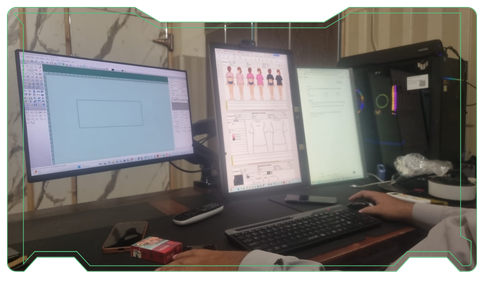
Building the fit and size foundation for your product.
Pattern Development & Grading
With an approved tech pack, our pattern team develops a base pattern that matches your desired silhouette, fit profile, and construction details. This base pattern is then checked and adjusted so that seams, panels, and style lines work properly in real production.
Once the base size is confirmed, we grade the pattern into the full size range you require, using sizing logic suitable for your market and product category. Accurate pattern development and grading are essential for consistent fit, balanced proportions, and reliable measurements across every size in your order.
If you already have patterns, we can also review, refine, or re‑grade them to align with Eco Jersey’s production standards before moving into sampling.
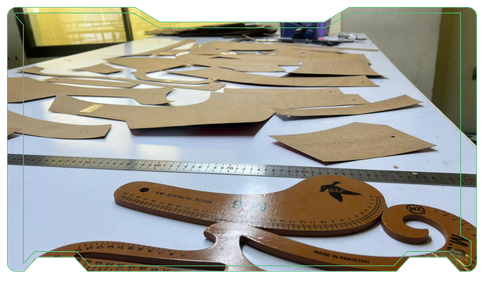
Testing your design before bulk production
Sampling & Prototyping
After patterns are ready, we create physical samples so you can see, touch, and test your product before committing to bulk production.
Depending on your project, this may include an initial prototype for design review, a fit sample to check sizing and balance, and a pre‑production sample (PPS) that reflects the final approved version. At each stage, we review fabric behavior, fit, seam quality, artwork execution, and overall appearance, then apply your feedback to refine the product.
This step helps remove surprises later and ensures that bulk production follows a standard you have already seen and approved.
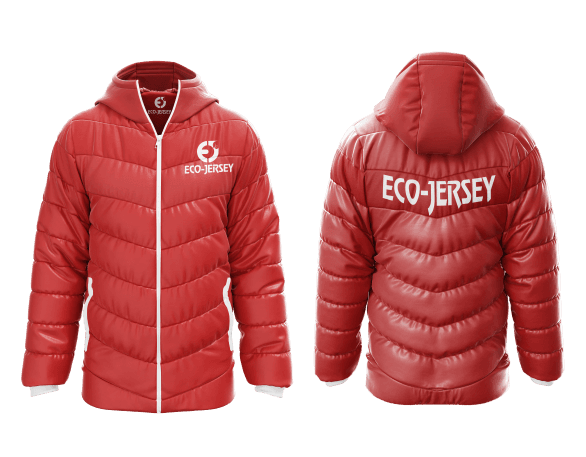
Selecting the right fabrics, trims, and accessories
Fabric & Material Sourcing
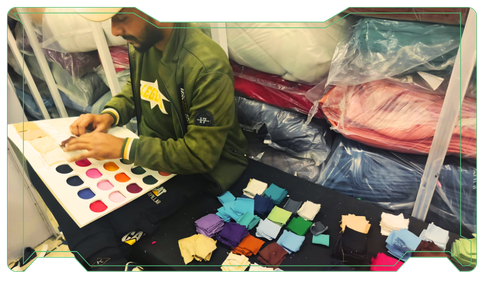
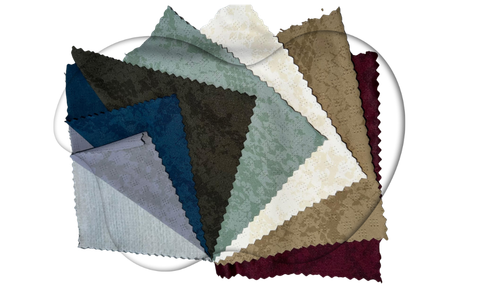
Once your sample direction is approved, we source fabrics and materials that match the agreed specifications and performance requirements. This includes selecting the right fabric composition, weight, stretch, handle, durability, and color standards for your specific product category.
Along with main fabrics, we also manage sourcing for trims and accessories such as zippers, buttons, snaps, cords, rib, elastic, labels, patches, lining materials, and packaging components. All key materials are checked for consistency and suitability before we move into bulk cutting, so production runs smoothly and your final garments match the approved standard.
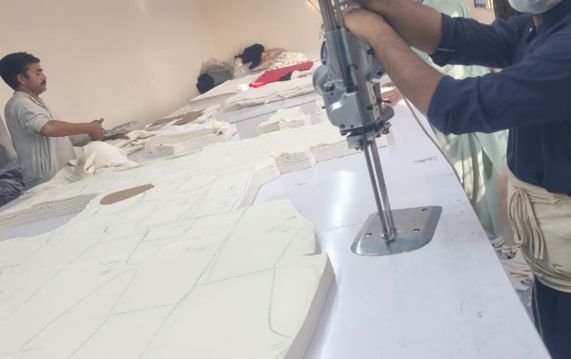
From inspected fabric to precisely cut panels
Cutting Process
Before cutting begins, fabric is inspected to check for visible defects, shade variation, and other issues that could affect the final garment. We then prepare markers to optimize fabric usage, align prints or patterns where needed, and ensure accurate panel placement across all sizes.
The cutting process is carried out with close attention to precision, because it directly impacts measurements, seam alignment, and overall garment balance. Accurate cutting is especially important for multi‑panel sportswear, sublimated styles, workwear, outerwear, leather, and denim, where even small deviations can be noticeable in the finished product.
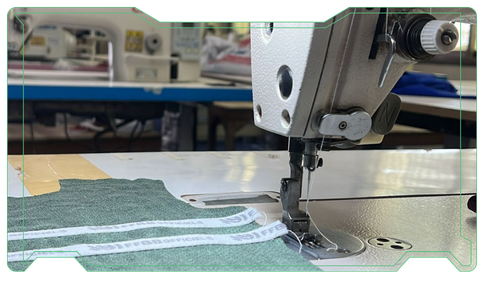
Organised production lines for consistent garment construction
Sewing & Assembly
After cutting, all panels and components move into sewing and assembly, where we organise production lines according to style complexity, order volume, and construction requirements. Our teams follow the approved tech pack, patterns, and samples for seam types, stitching density, reinforcement points, and assembly sequence.
Different categories are handled with different techniques—stretch garments require flexible seams, workwear and motorbike apparel need heavy‑duty reinforcement, outerwear involves layered construction, and fashionwear may demand finer finishing. The goal is the same in every case: repeatable, stable quality across the entire production run.
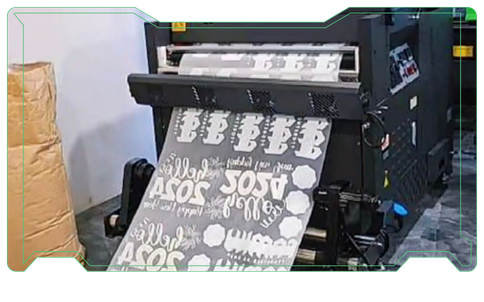
Applying your branding, graphics, and embellishments
Printing & Customization
Once core construction is in place, we apply printing and customization according to your approved artwork and branding guidelines. Depending on the fabric, design, and end use, we can use methods such as screen printing, sublimation, embroidery, heat transfer, patches, and other embellishments suited to your products.
The right process is selected based on color durability, fabric composition, design complexity, and order volume, so that your logos and graphics look sharp and perform well in real use. This stage connects your brand identity directly to the garment and is handled with the same discipline as the rest of production.
Cleaning, shaping, and preparing garments for final inspection
Finishing Process
After sewing and customization, garments move into the finishing stage, where we focus on final presentation and feel. This includes thread trimming, loose yarn removal, pressing or ironing, minor repairs where needed, and reshaping the garment so it sits correctly on the body.
Finishing is especially important for categories like fashionwear, outerwear, premium sportswear, and denim, where appearance and detailing strongly influence how your product is perceived. By the time finishing is complete, each piece is ready for final quality checks and packing.
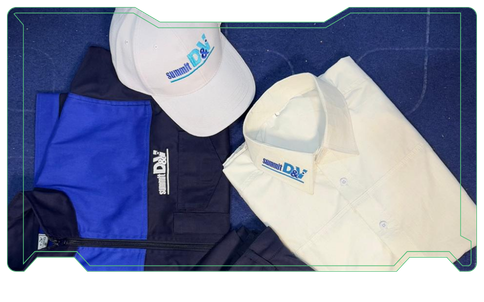
Checking workmanship, measurements, and overall quality
Quality Control
Quality control is built into our manufacturing process, not just added at the end. During production, inline inspections monitor stitching quality, seam strength, component placement, and overall workmanship so issues are caught early.
Before any order is approved for packing, we carry out final checks on appearance, measurements, branding, finishing, and style consistency against the approved sample and specification. This structured approach helps reduce defects, improve reliability, and support repeatable quality across your collections.
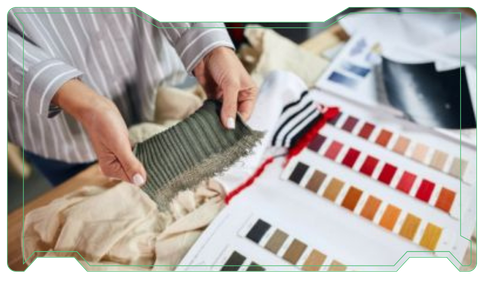
Preparing export‑ready cartons and on‑time shipments
Packaging & Dispatch
After final inspection, approved garments move to packing, where we follow your folding, tagging, and packing instructions. This can include individual poly bagging, size and barcode labeling, branded packaging, and order‑wise or size‑wise assortments prepared for easy warehouse handling.
Cartons are then sealed, marked, and prepared according to export and logistics requirements, so your goods can move smoothly through shipping, customs, and distribution. Our goal at this stage is simple: clean presentation, accurate packing, and reliable, on‑time dispatch for every order.
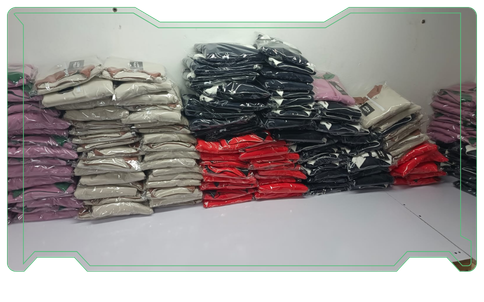
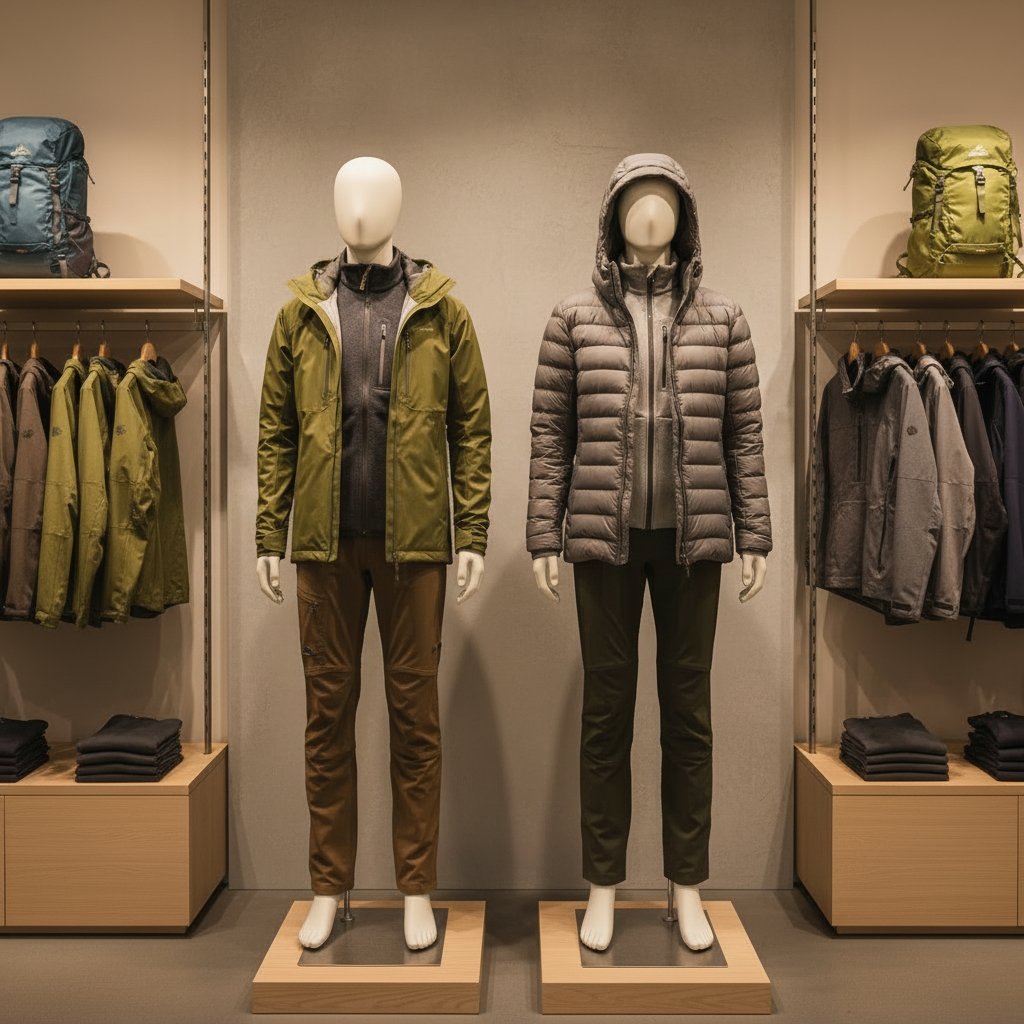

Inline Production Checks
During sewing and assembly, our quality team performs inline inspections directly on the production lines. Stitching, seam strength, labels, and component placement are checked while garments are still in process.

Measurement & Fit Control
Throughout production, we take measurement samples from the line and compare them against your tech pack and approved pre‑production sample. Key points like chest, waist, length, sleeve, and grading steps are verified.

Final Audit Before Dispatch
Before packing and shipment, each order goes through a final audit that reviews appearance, branding, labeling, finishing quality, packing accuracy, and overall consistency.